
Art of the Vatican Museums: Must-See Rooms, & Tips for Visiting
April 29, 2026
The Vatican Museums serve two purposes: As the Papal Palaces they have been home to centuries of popes, who built and decorated apartments to suit their sensibilities. Just as importantly though, they house some of the world’s most beautiful and important art.
Covering a staggering 9 miles, the Vatican Museums’ art collection includes Greek and Roman sculptures; masterworks by Raphael, Giotto, Perugino and Caravaggio to name just a few Renaissance geniuses; medieval maps and tapestries; and world-famous rooms like the Sistine Chapel.
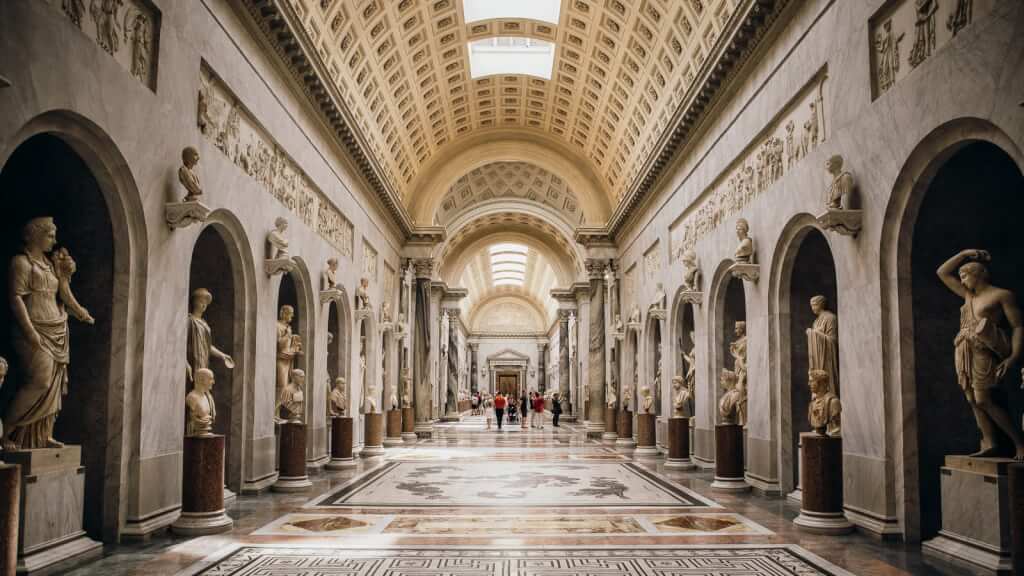
Although Pope Francis has opted for a more humble abode in the Vatican Hotel, his forebears shaped the Vatican Museums into a unique mix of architectural masterwork and history-spanning art collection. The result is a huge and impressive complex that wonderfully blurs the line between private residence and public gallery.
With over 1,400 rooms, chapels, and galleries, and more than 50 individual museum collections, the sheer scale of the Vatican Museums can feel overwhelming, even for seasoned travelers. Having a plan before you visit is essential to making the most of your time.
Visiting the Vatican Museums: What to See
Must-See Highlights – Quick Guide
Before diving into the details, it helps to know what not to miss. The Vatican Museums are huge, and can quickly feel overwhelming, especially on a first visit. This quick checklist highlights the key rooms, masterpieces, and hidden gems to look out for, so you can navigate the collections with confidence and make sure you don’t miss the true highlights.
- Sistine Chapel – Michelangelo’s iconic ceiling and The Last Judgment; the most famous room in the Vatican
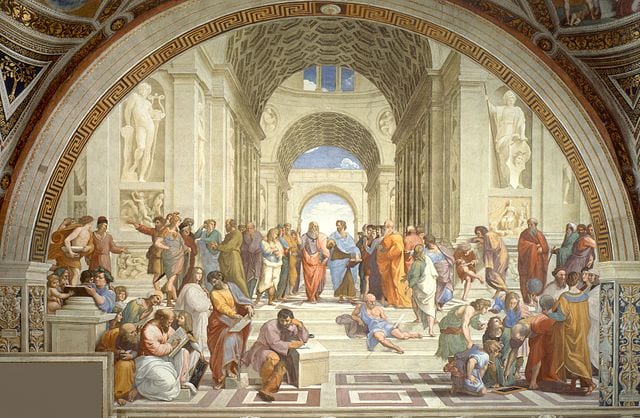
- Raphael Rooms – Renaissance masterpieces, including The School of Athens
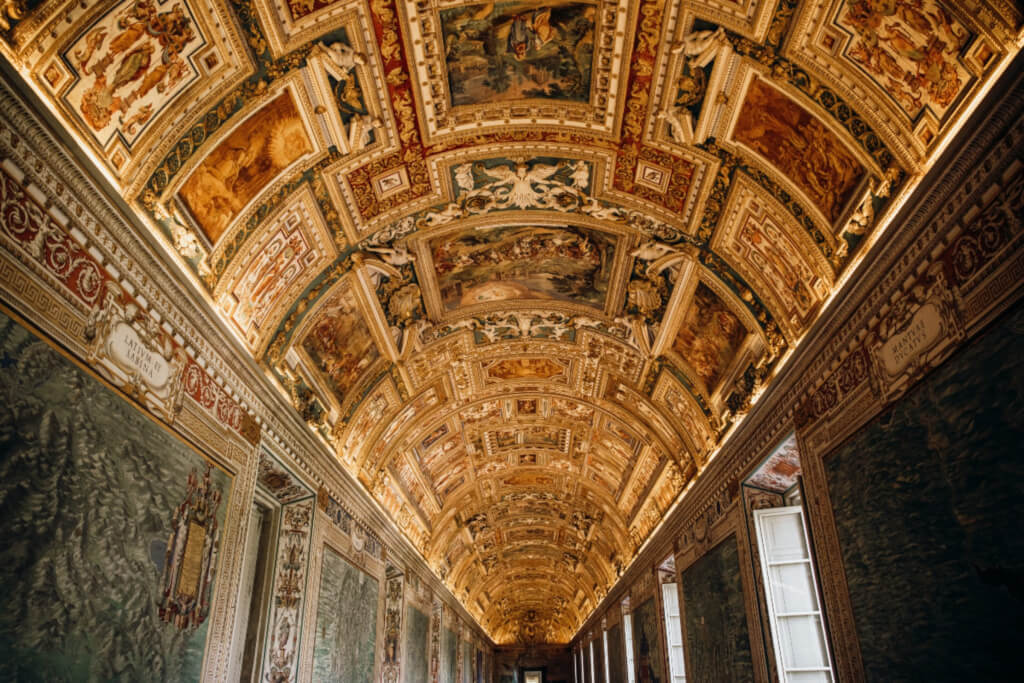
- Gallery of the Maps – Stunning 16th-century fresco maps of Italy with an ornate painted ceiling
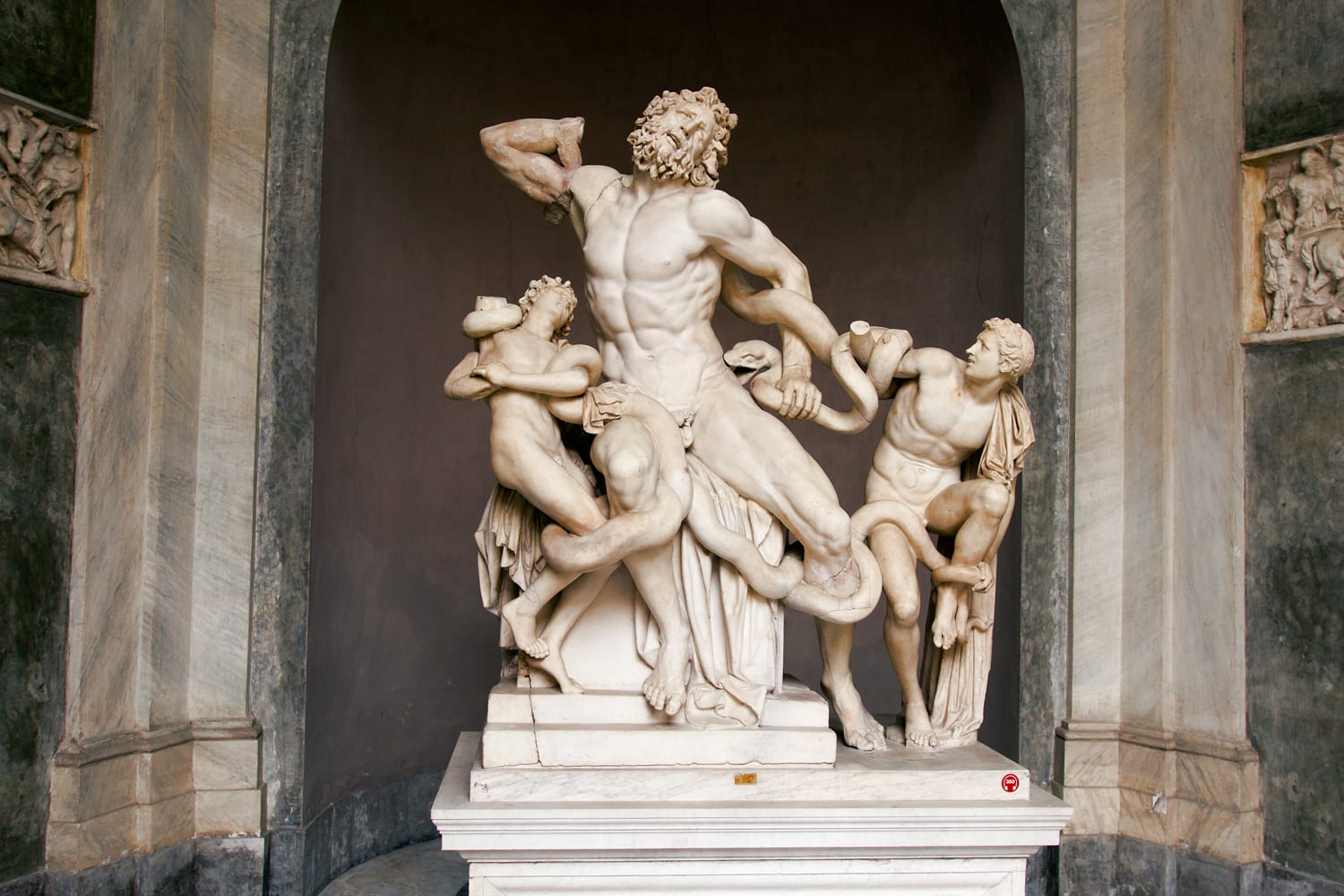
- Laocoön and His Sons – Dramatic ancient sculpture of a Trojan priest battling sea serpents
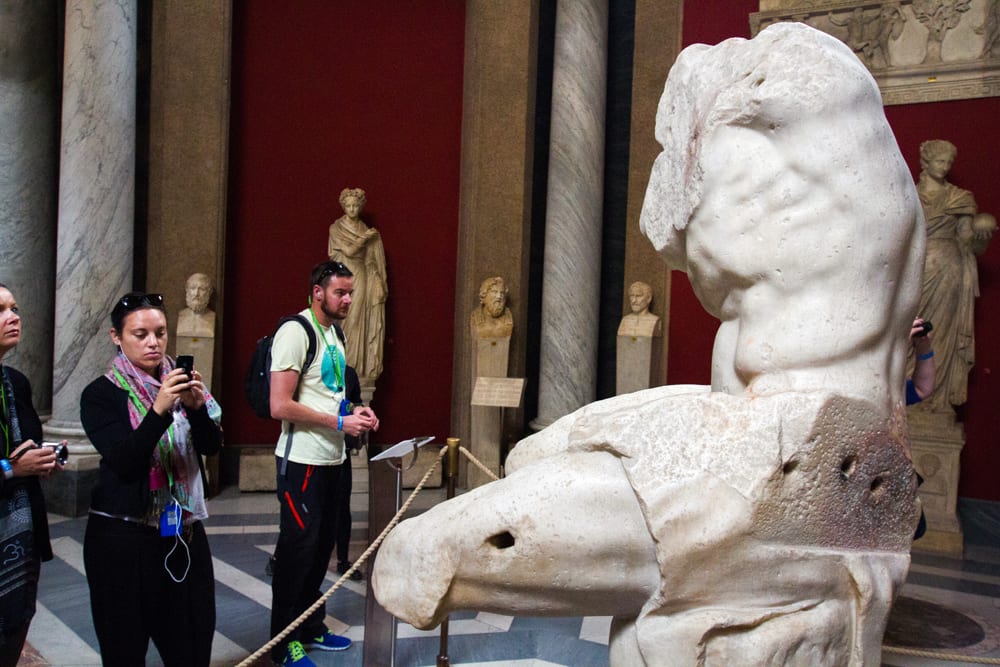
- Apollo Belvedere & Belvedere Torso – Influential classical statues that shaped Renaissance art
- Borgia Apartments – Richly decorated papal rooms with frescoes by Pinturicchio
- Pinacoteca (Art Gallery) – Paintings by Raphael, Caravaggio, Giotto, and Leonardo da Vinci
- Nero’s Bathtub (Porphyry Basin) – Massive ancient Roman bath carved from rare red stone
- Egyptian Museum – Unique collection of mummies, sarcophagi, and ancient artifacts
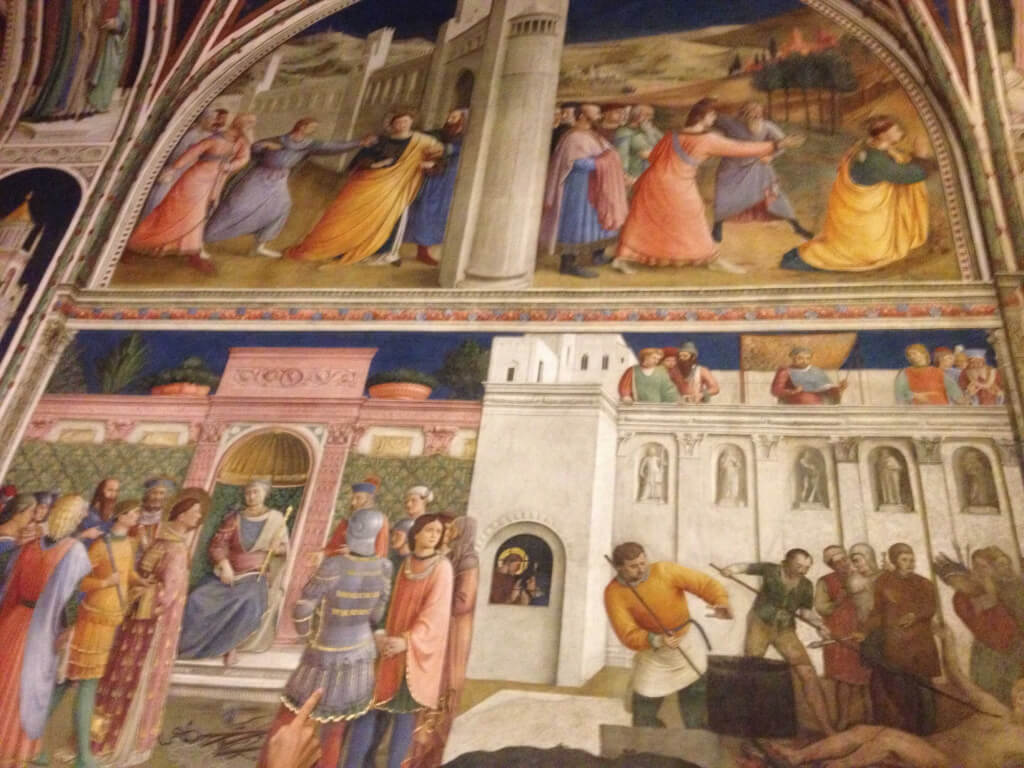
- Niccoline Chapel – Hidden gem with Fra Angelico frescoes (special access only)
- Room of the Animals – A “stone zoo” of animal sculptures, great for families
(And don´t worry, there is a detailed review of each of these coming up, once we have given you an insight into the logistical information that will help your visit go smoothly!)
Tips For Visiting the Vatican Museums
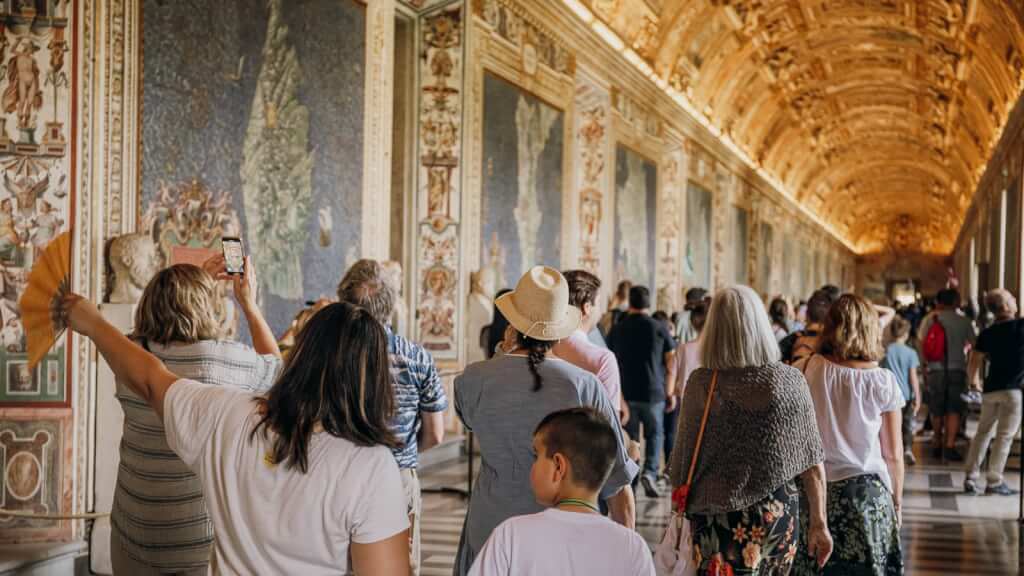
The Vatican Museums: Join a “skip the line” guided tour to make the most of your visit.
Opening Times
The Vatican Museums now operate under standard opening conditions, and advance online booking is strongly recommended to avoid long queues, especially during peak seasons.
- Monday to Saturday: 8:00am – 8:00pm (Last entry at 6:00pm)
- Last Sunday of each month: 9:00am – 2:00pm (Last entry at 12:30pm
- Visitors are required to leave the exhibition spaces 30 minutes before closing time
Scheduled Closures
Opening hours and closures can change for special events or religious occasions, so always check the official Vatican Museums website before your visit.
- The Vatican Museums are closed on Sundays, except for the last Sunday of the month.
- They are also typically closed on the following dates:
- January 1 (New Year’s Day), January 6 (Epiphany), February 11 (Lateran Treaty anniversary), March 19 (St. Joseph’s Day), Easter Sunday (date varies each year), June 29 (Feast of Saints Peter and Paul), August 15 (Assumption of Mary), November 1 (All Saints’ Day), December 8 (Immaculate Conception), December 25 (Christmas Day), December 26 (St. Stephen’s Day)
Best Time for Visiting the Vatican Museums
In a normal year, May through September are considered the high season in Rome, with a bump around Easter which, for a few days, is the busiest time of year. If you visit the Vatican Museums during these months expect to be shoulder to shoulder.
To avoid the worst crowds, which can exceed 20,000 visitors per day, aim to visit early in the morning, later in the afternoon, or consider booking a guided tour with early access.
Vatican Museums Ticket Prices
While you can buy tickets at the door, queues can be extremely long, especially in summer. Booking online for a timed entry (even with the small extra fee) is usually well worth it to save time and guarantee entry.
Ticket prices for the Vatican Museums are relatively straightforward, but there are a few key differences depending on how you book:
- Standard adult ticket: €20 (purchased on-site)
- Online “skip-the-line” ticket: €25 (includes €5 booking fee)
- Reduced ticket (students/young visitors): €10 (or €15 with online booking)
- Children under 6: Free
- Free entry: Last Sunday of each month (very busy)
Guided Tours
To get the most out of your visit, you can also take one of the Vatican City Tours which include skip-the-line entry, small group sizes, and expert local guides who bring the Vatican’s art and history to life.
Some tours also offer early access to the Sistine Chapel before the crowds arrive, or more in-depth private options for a quieter, more personalised experience. It’s an easy way to save time, avoid stress, and see far more than you would on your own.
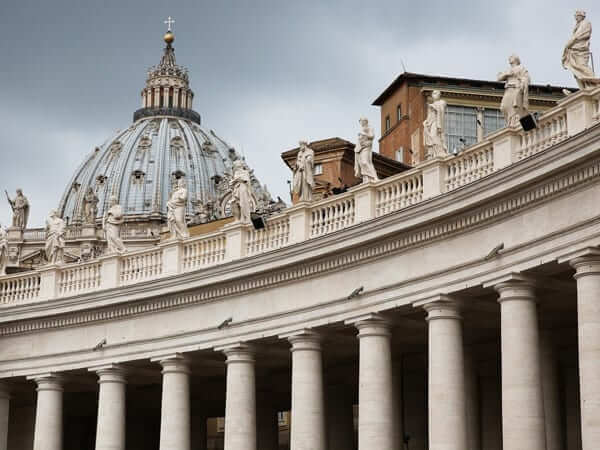
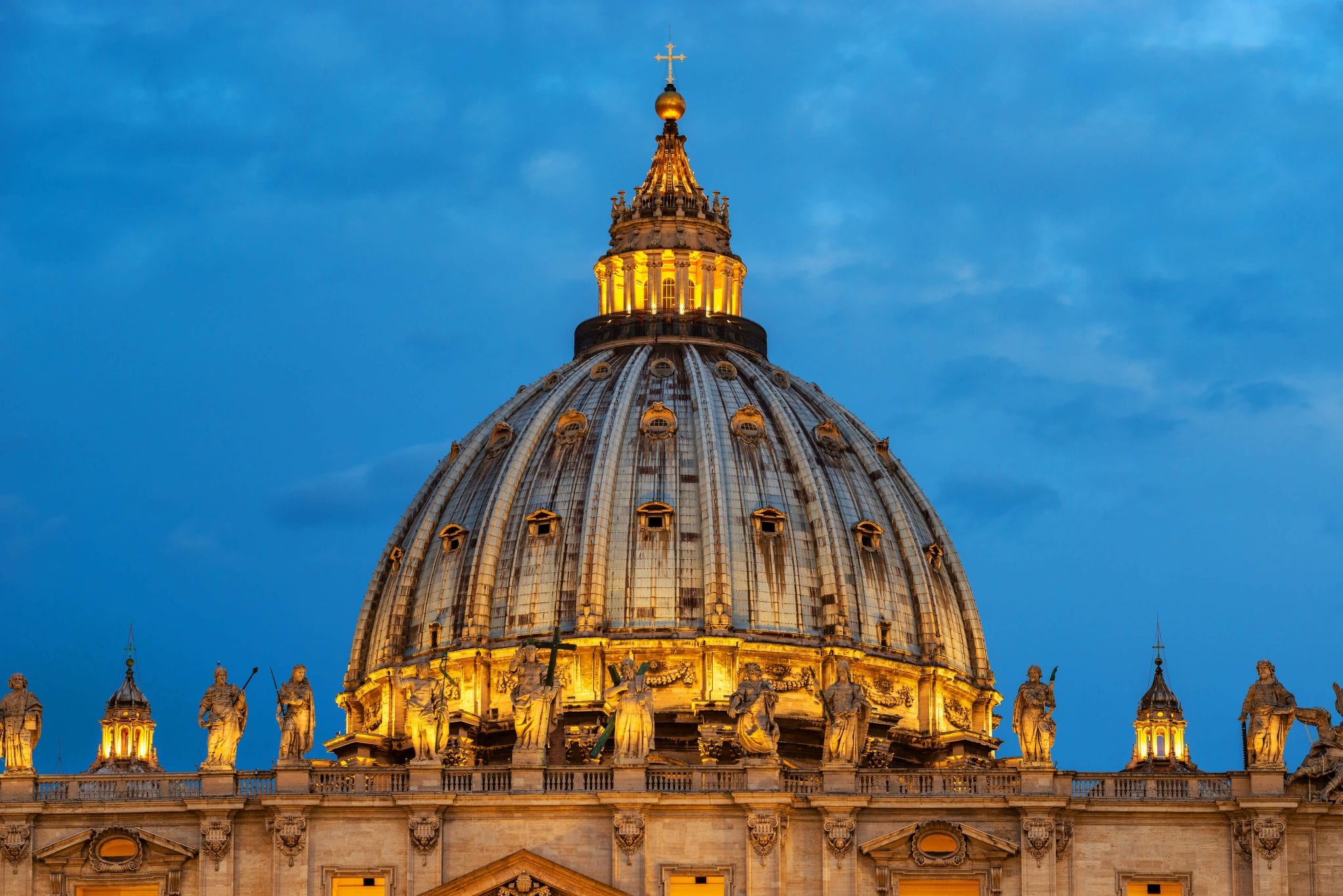 The Dome of St. Peter’s Basilica in Vatican City
Rules for Visiting the Vatican Museums
The rules of the Vatican are strict and pretty uncompromising – please familiarise yourself with them before attempting to visit.
Dress Code
The Vatican has a strict dress code, and request all visitors to dress respectfully and appropriately.
Both men and women should be sure to wear clothes that cover their shoulders and knees. Even in summer you may not be permitted to enter if you are wearing clothes that are considered too revealing, so avoid shorts, tops with no sleeves and items such as crop tops! Hats are also not allowed.
Insider Tip: For full details of the dress code, and recommendations on what to pack and wear during your stay, check out our article on how to navigate the Vatican Dress Code.
What NOT to bring
- Food and drink are not allowed into the Vatican Museums. You can, however, leave them in the cloakroom and collect them at the end of your visit. Any food or drink that goes uncollected will be disposed of at the end of each day.
- You cannot bring large bags or suitcases. This includes any bag, backpack, suitcase or container larger than 40 x 35 x15cm. Similarly, you can’t enter with medium to large umbrellas, camera tripods or selfie sticks. All of these items can be left in the cloakroom.
Photography and Audio equipment
- Visitors are allowed to take non-flash photographs anywhere in the Vatican Museums, EXCEPT the Sistine Chapel. However, flash photography is prohibited.
- If you want to draw anything in the museums you must get permission from the Vatican Management in advance
- Mobile phone use is allowed everywhere EXCEPT the Sistine Chapel.
- Due to the sacred nature of the Sistine Chapel speaking is not permitted inside.
- All tour groups are required to wear headsets for groups of 11 or more people. The use of microphones or any type of voice amplifiers is prohibited.
- The Vatican Museums are under constant video surveillance and any touching or tampering with artwork is strictly prohibited. Also, no laser pointers.
Read more: The Biggest Mistakes When Visiting the Vatican
The Best Way to Get to the Vatican Museums
The best way to reach the Vatican Museums is by taxi or metro
If traveling by taxi, make sure to specify to the driver that you are going to the entrance of the the Vatican Museums, (“Musei Vaticani”) NOT the Basilica of St. Peter (“Basilica Papale di San Pietro in Vaticano”) which is a 15 minute walk away.
If traveling by metro, take the Metro A line to the Ottaviano stop. As you exit the stop turn left down Via Candia and turn left at Via Tunisi. At the end of the street you’ll reach a set of steps. Climb them and at the top you’ll find yourself at the entrance to the Vatican Museums.
Insider Tip: Unless you are traveling with a guided tour that includes visiting St. Peter’s Basilica, the church isn’t accessible from the Museums. If you want to visit it you will have to exit the Museums, turn right, and follow the wall around to the entrance of St. Peter’s. It’s about a 15-minute walk.
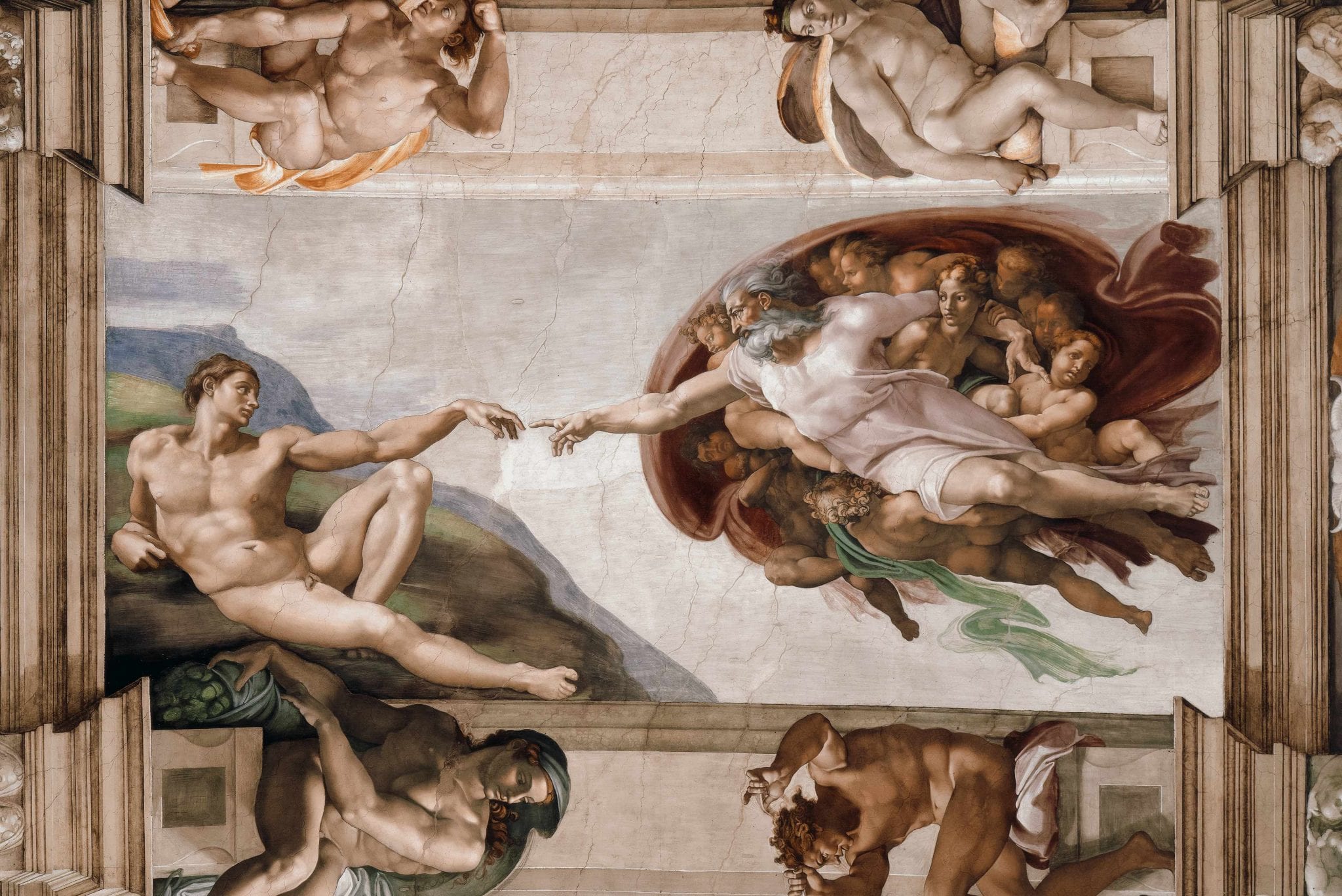
See the Sistine Chapel without the crowds on a private tour to the Vatican.
Inside the Vatican Museums: Must-See Rooms Explained
The Sistine Chapel
The Vatican’s Sistine Chapel is probably the most well-known single room in the world, mostly because of the awe-inspiring frescoes by that titan of the Renaissance, Michelangelo Buonarroti.
Michelangelo’s work is actually comprised of two different frescoes: The ceiling, featuring scenes from the Old Testament, and the altar wall, which holds his dark and thrilling Last Judgement. The ceiling alone spans over 8,600 square feet and is divided into nine panels, including the iconic Creation of Adam, where God reaches out to touch Adam’s fingertip.
He painted both in the 1500s but with a break of 23 years between the ceiling and The Last Supper.
Despite considering himself more of a sculptor than a painter (in fact, he declined the pope’s first request to paint the chapel), he created some of the most enduring and reproduced images in the history of art; such as The Creation of Adam.
- Insider Tip: Keep in mind that visiting the Sistine Chapel can be crowded and requires silence due to its ongoing religious use. Try to visit early in the morning or late in the day for a more atmospheric experience.
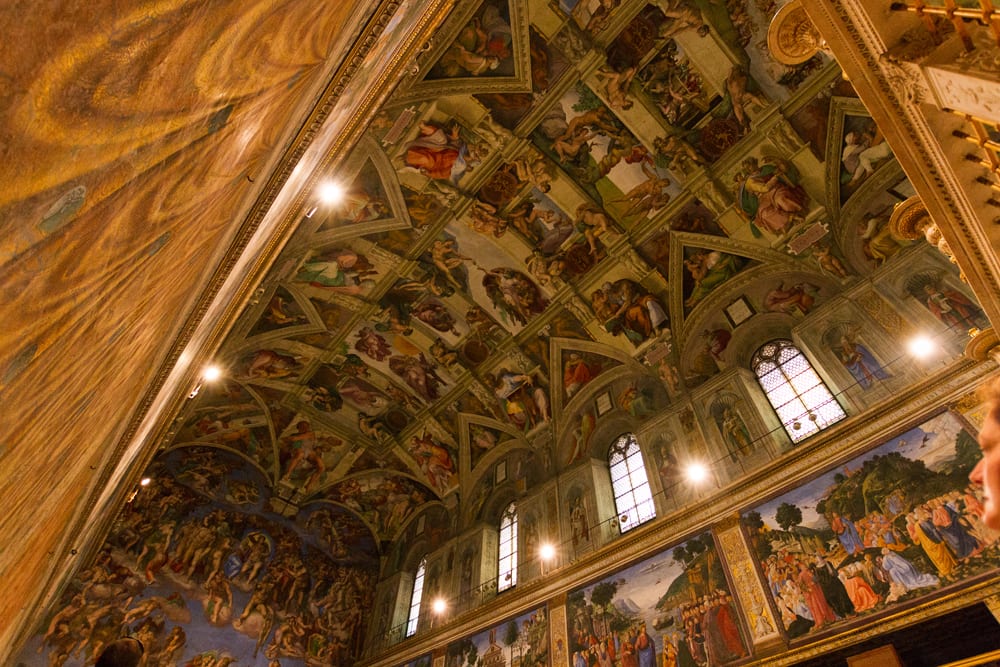
Sistine Chapel Ceiling
Often mistakenly called the “Sixteenth Chapel”, the room itself was built in 1481, under the commission of Pope Sixtus IV, for whom it was named. Although it attracts a large number of visitors every day, the Sistine Chapel is still used for masses and, more famously, papal conclaves.
The latter take place when the College of Cardinals convenes to elect a new pope upon the death or resignation of the current one. Among all the beautiful rooms in Italy, the Sistine Chapel reigns supreme for the unique experience it affords visitors of earth-shattering grandeur and startling intimacy.
The Raphael Rooms
In 1508 Pope Julius II decided to brighten his papal apartments with a lick of paint. He called on a young painter from Urbino by the name of Raphael and the rest is history.
The frescoes painted by the soon-to-be master (along with Michelangelo’s Sistine Chapel frescoes) kicked off the period of incomparable artistic exuberance now known as the High Renaissance. The papal apartment project outlived Pope Julius II and even Raphael, so all of the frescoes in the largest room, the Sala di Constantino, were actually painted by Raphael’s assistants.
Raphael’s School of Athens
To see the master’s finest work, visitors crowd into the Stanza della Segnatura, Pope Julius’ study, to gape at the Scuola di Ateni or School of Athens. This masterpiece brings together the greatest philosophers of antiquity, Plato and Aristotle at its center, and even includes Raphael himself, painted into the scene.
The beauty of the four Raphael Rooms has made them one of the most beloved stops in the Vatican Museums, second only to the Sistine Chapel. When you visit, keep an eye out for likenesses in the paintings. Raphael painted many of his contemporaries into the School of Athens, paying particular homage to his sometime hero, sometime rival – Michelangelo.
Like the Sistine Chapel, these rooms are among the most crowded areas of the museums, so visiting early or as part of a guided tour can greatly enhance the experience.
Gallery of the Maps
One of the most striking of the Vatican’s many long galleries, the Gallery of the Maps is lined with frescoes that are all based on the work of one man; the 16th century priest and polymath Ignazio Danti.
On top of being a respected scientist, mathematician, and astronomer, Danti was a dab hand at painting maps. When Pope Gregory XIII summoned him to Rome in 1580 to supervise the fresco painting in a new gallery, Danti embarked on a cartographic masterwork larger than anything ever attempted in Europe.
The Gallery of Maps
Working from existing maps, he and a team of artists created 40 frescoes showing every part of Italy from a bird’s eye view. The frescoes sit somewhere between maps and landscape paintings, beautiful in their execution and nearly unbelievable in their scope.
The gallery is not just informative but visually stunning, don’t forget to look up, as the ornate ceiling is just as impressive as the maps themselves!
Laocoön and His Sons
This often-mispronounced Hellenistic statue (for the record, it’s Lay-o-ku-won) is one of the most beautiful and controversial antiquities from Italy.
Located in the Octagonal Courtyard of the Museo Pio-Clementino, this first-century marble sculpture depicts the Trojan priest Laocoön and his sons in a dramatic struggle with sea serpents sent by the gods.
Laocoon and His Sons
When Laocoön was unearthed, it was immediately recognized as a masterpiece, both in its depiction of the of the body and unbridled agony. Like many stone statues of the period, it’s most likely a copy of a bronze statue that has been lost, though that is a matter of debate.
What is certain is that it’s impossible to look upon the statue without being amazed that something so lifelike was created by human hands over 2,000 years ago.
The Apollo Belvedere and Belvedere Torso
You’d be hard pressed to find two statues that have had more of an influence on Western art than the Apollo Belvedere and the Belvedere Torso; both housed in the Vatican Museums.
The Apollo Belvedere is the most important statue you’ve never heard of. This 4th century BC marble statue of the Greek god Apollo was adored by those who developed the discipline of Art History in the 18th century.
For those who prefer something a little more robust, the Belvedere Torso has had a similarly outsized influence on artists; but while the Apollo is boyish and gentle, the torso is rugged and muscular.
The Belvedere Torso
The Belvedere Torso, likely representing Hercules, is a powerful fragment from the 1st century BC that greatly influenced Michelangelo’s depiction of the human form—particularly in the Sistine Chapel’s Last Judgment.
When you see the Belvedere Torso, pay attention to the way it is posed. That same pose appears again and again in Renaissance art. In one of those strange twists of randomness that seem to happen fairly regularly with antiquities.
The reason both statues include “Belvedere” in their names is because they were originally on display in the Belvedere Courtyard. Apollo still stands there today, while the Torso has been moved inside.
The Borgia Apartments
Like his successor Julius II, Pope Alexander VI (AKA: Rodrigo de Borgia) commissioned a Renaissance master, Pinturicchio, to spruce up his apartment in the Vatican.
These richly decorated rooms feature detailed Renaissance frescoes, including scenes filled with symbolic references to the Borgia family. Interestingly, some believe that figures within the paintings resemble members of the Borgia family themselves, adding an extra layer of intrigue.
One painting, The Resurrection, even features what is thought to be the earliest known European depiction of Native Americans, which he painted in 1494, just two years after Christopher Columbus’ fateful voyage.
Because they sit alongside the Raphael Rooms and Sistine Chapel, Pinturicchio’s masterpieces are often skipped over or ignored by visitors but those in the know take advantage to enjoy some of the Renaissance’s finest frescoes in relative peace.
The Niccoline Chapel
This is the Vatican’s hidden gem, literally. Originally built as a private chapel for Pope Nicholas V, it’s hidden away behind lock and key in the oldest section of the Apostolic Palace. This small chapel features exquisite frescoes by Fra Angelico and offers a far more intimate experience than the larger, more crowded spaces of the museums. The Niccoline Chapel is only visitable on special access tours and is not open to the public.
Niccoline Chapel
The Pinacoteca Art Gallery
A gallery within a gallery, the Pinacoteca Art Gallery is a more modern wing of the Vatican Museums and home to an impressive collection of paintings and works, stretching from the early Renaissance all the way to modern day. Compact in size, it makes for a very manageable visit although it’s covered on very few tours.
It houses works by masters such as Giotto, Caravaggio, and Raphael, including his celebrated “Transfiguration” and “Madonna of Foligno,” making it a worthwhile stop for those looking to escape the busiest areas. Keep an eye out for the only work by Leonardo da Vinci in the Vatican Museums, a rough sketch called St. Jerome in the Wilderness; and paintings by Veronese, Bellini, Titian and Perugino.
Nero’s Bathtub
Valued by some as high as €2 billion, Nero’s bathtub is one of the most precious works in the Vatican Museums. Also known as the Porphyry Basin, this red stone basin, nearly 40 feet across, was recovered from Emperor Nero’s Domus Aurea and stands as a symbol of imperial luxury and excess.
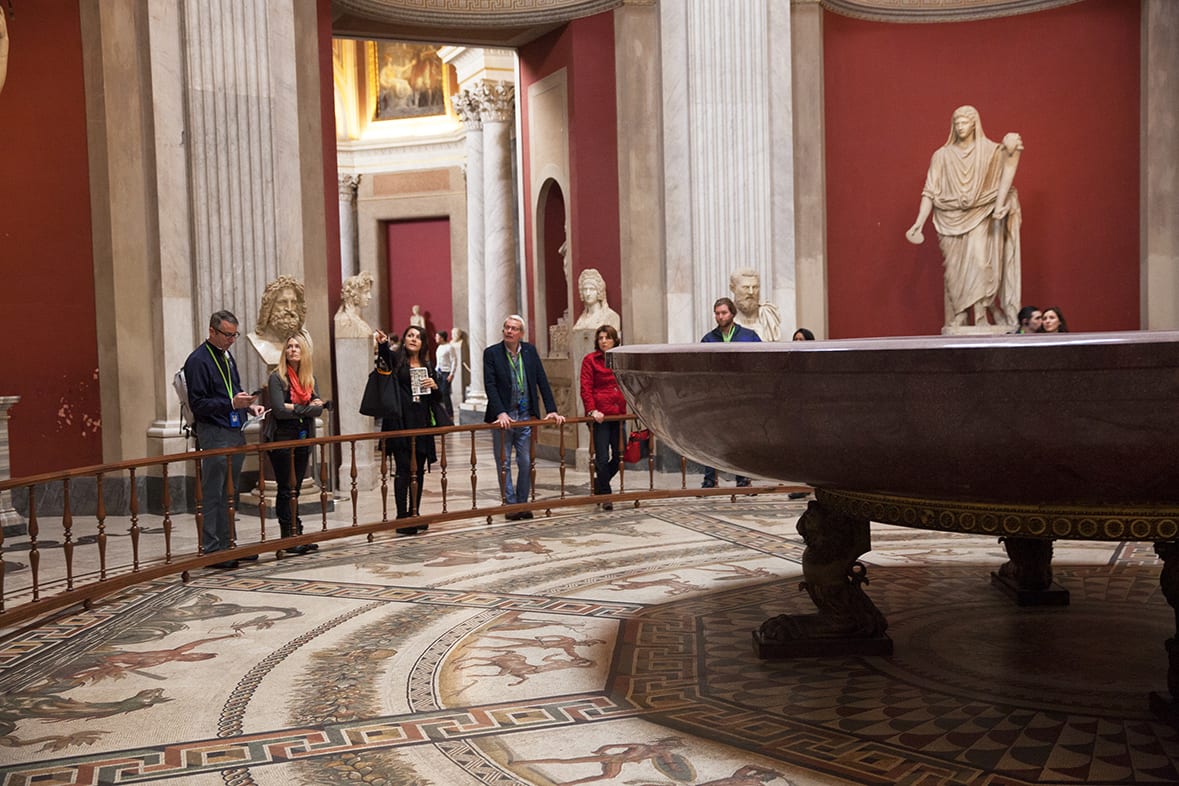
Nero’s Bathtub
It’s made of a deep red/purple porphyry marble, which, in the age of Nero, was one of the most desirable decorative materials available. The stone was quarried from a single source in Egypt and no other deposits of it have ever been found. It is extremely heavy, and a nightmare to move, and transport by boat from Egypt to Rome, making its ownership the ultimate show of wealth.
Today the Vatican is home to 80% of the world’s store of porphyry and Nero’s Bathtub is its most impressive piece.
The Egyptian Museum
The Egyptian Museum is a wing of the Vatican Museums that few visitors ever see, and one that’s well worth a visit in its own right. Decorated in an Egyptian style, these rooms house a collection of mummy cases and sarcophagi, Ancient Egyptian jewelry, Egyptian-style statues taken from Hadrian’s Villa in Tivoli and a number of authentic Ancient Egyptian statues dating all the way back to the 21st century BC.
Because they are so different to the rest of the collection, the Egyptian antiquities are rarely included on group tours. But they are a fantastic reflection of the diversity contained within the Vatican Museum’s art collection.
The Room of the Animals
Great for kids and animal-lovers, the Hall of the Animals was created under Pope Pius VI as a “stone zoo” and follows through on its promise with a number of fantastic stone sculptures, most of which were created in the 1700s.
Looking for a More Personalized Experience?
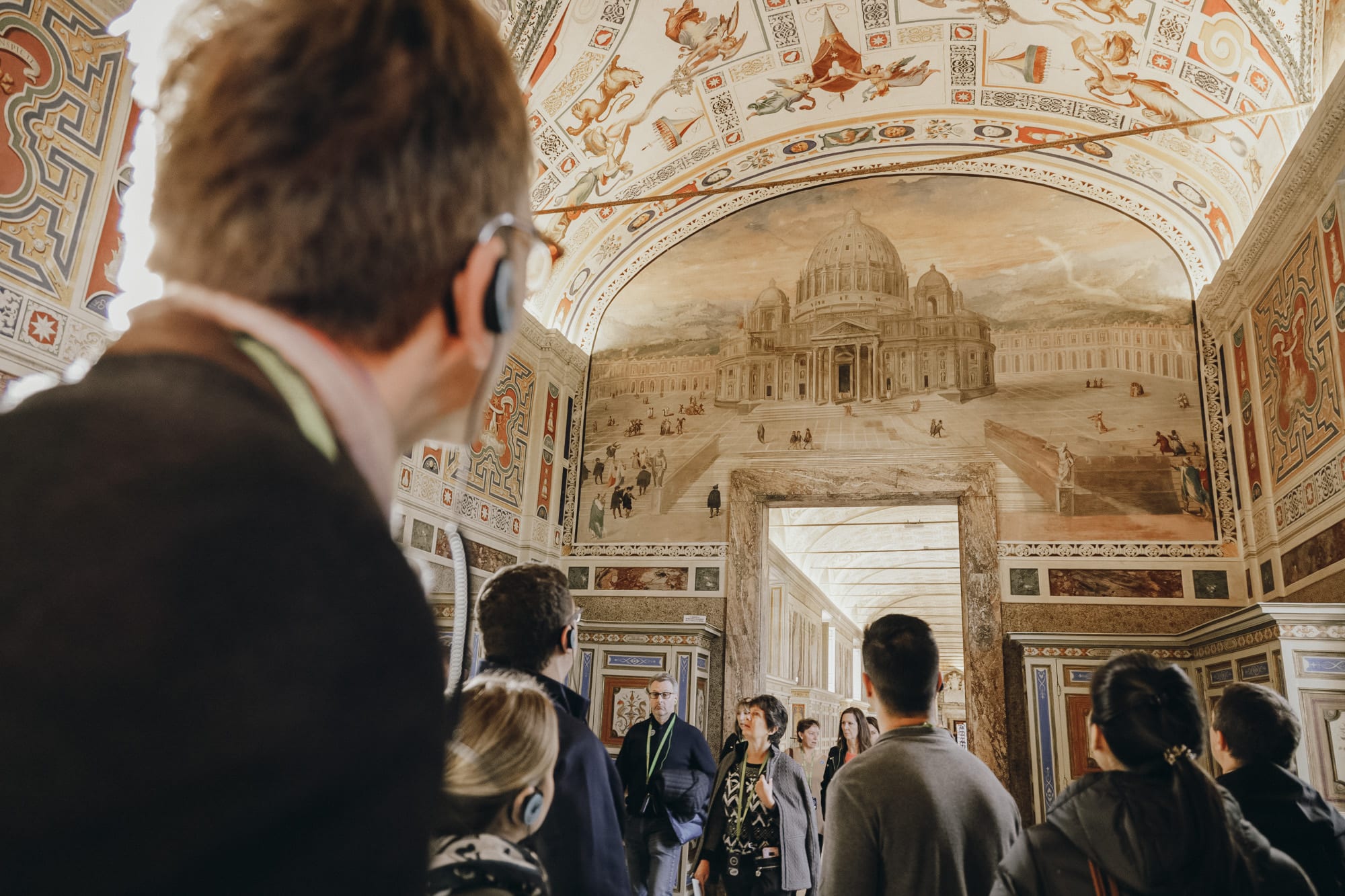
Expert guides will bring the art and it´s history to life
Private Tours
For those looking to make their visit truly special, Walks of Italy’s Private Tours in Rome offer an exclusive way to experience the Vatican Museums and the city’s other highlights. With a private guide, you’ll enjoy a tailored itinerary at your pace: Explore without rushing, with freedom to slow down in moments that matter to you.
What’s Included:
- Private tour of the Vatican Museums, including the Sistine Chapel and Raphael Rooms
- Visits to major sites like the Colosseum, Roman Forum, and Pantheon (depending on the tour selected)
- Priority entry to avoid long waits
- Personalized recommendations for the rest of your stay in Rome
Booking a private tour ensures you can explore the Vatican’s treasures at your own pace, ask questions, and dive deep into the history and art that make this place unique. For more information and to book, take a look at our Private Tours in Rome.

Book a Tour

Pristine Sistine - The Chapel at its Best
€89

1794 reviews

Premium Colosseum Tour with Roman Forum Palatine Hill
€56
850 reviews
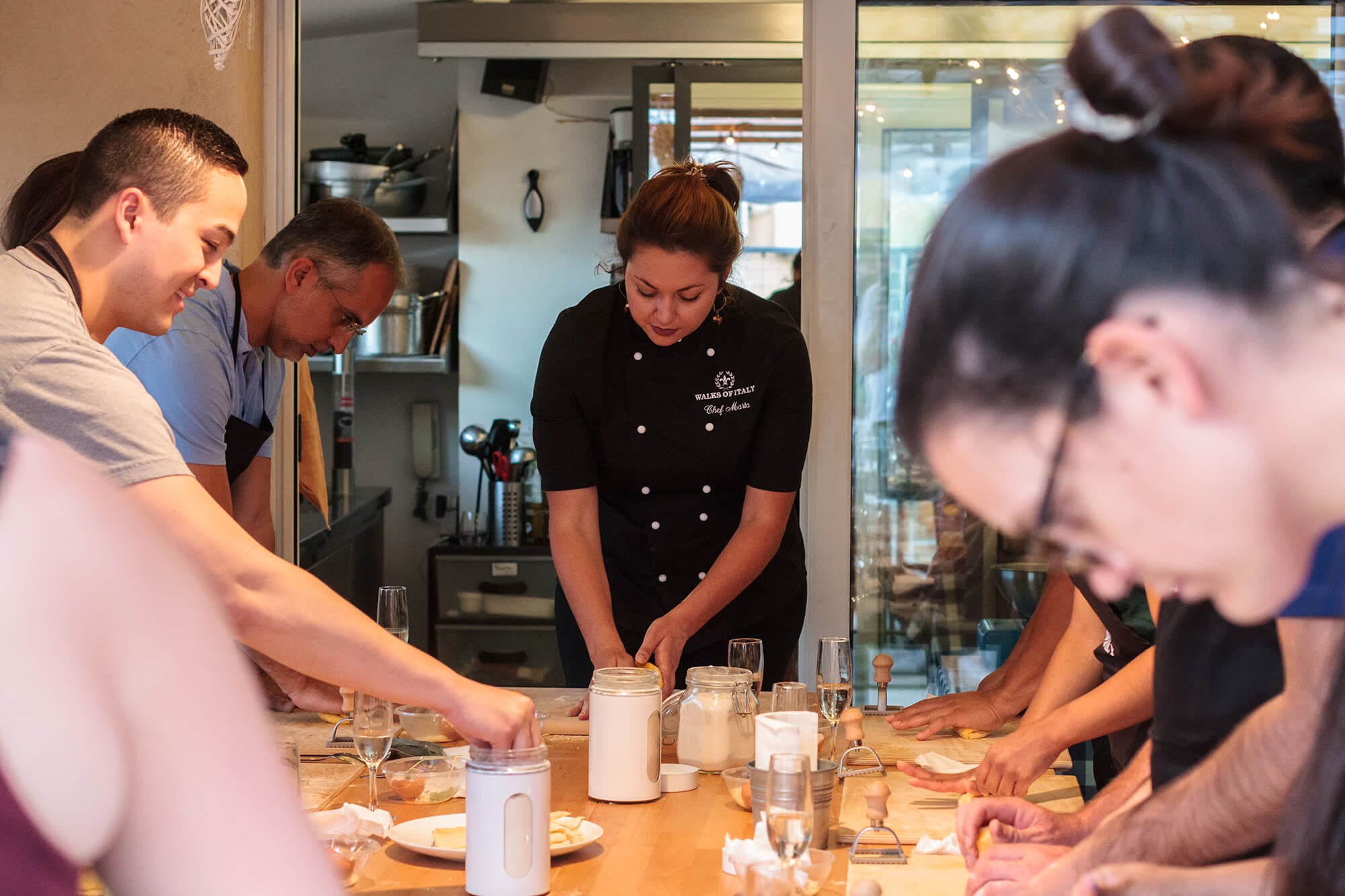
Pasta-Making Class: Cook, Dine Drink Wine with a Local Chef
€64
121 reviews

Crypts, Bones Catacombs: Underground Tour of Rome
€69
401 reviews

VIP Doge's Palace Secret Passages Tour
€79
18 reviews

Legendary Venice: St. Mark's Basilica, Terrace Doge's Palace
€69
286 reviews
Follow us
Stay up to date with travel tips, local insights and all things Italy on our social channels!


Subscribe to our Newsletter
Get curated Italy travel tips delivered to your inbox!

