
Why Visit Emilia-Romagna? 8 Things We Love About the Region
September 7, 2026
Italy’s Emilia-Romagna region has a little bit of everything that makes Italy so irresistible. Beautiful historic cities, world-famous food, spectacular art, and a rich cultural heritage. From the medieval streets of Bologna to the elegant squares of Modena and the extraordinary mosaics of Ravenna, there’s plenty to discover.
And then there’s the food. This is the birthplace of some of Italy’s most famous culinary traditions, including Parmigiano Reggiano, traditional balsamic vinegar, prosciutto di Parma, and fresh pasta. Add in fast cars, Renaissance history, and charming towns that are often overlooked by international visitors, and you have a region that deserves a place on any Italian itinerary.
Here are eight things we love about Emilia-Romagna, and why you should visit.
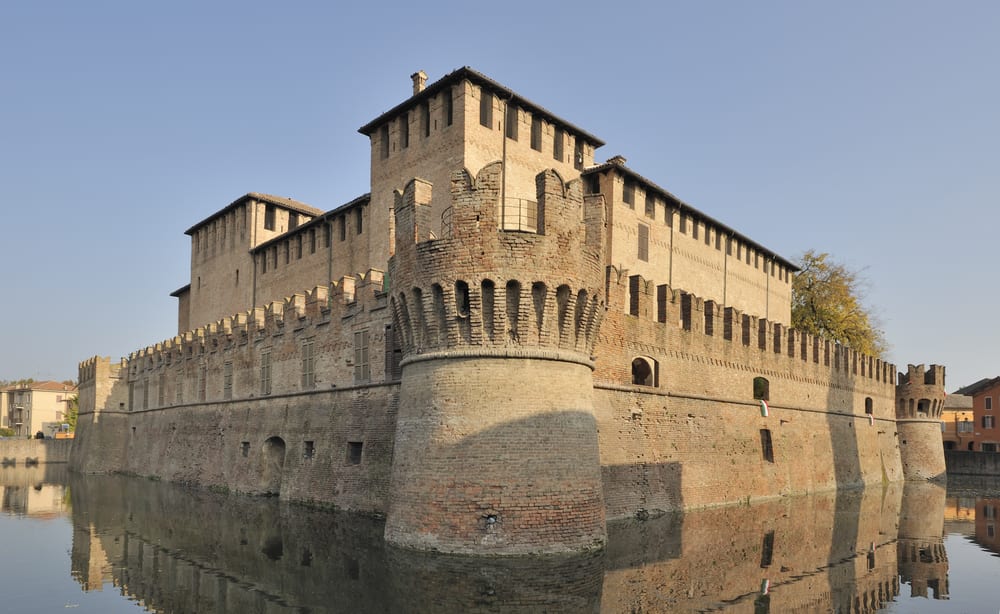
Parma, a gem in Emilia-Romagna
What is Emilia-Romagna famous for?
Historic Castles: Medieval and Renaissance-era
Emilia-Romagna’s history has been, well, pretty confused. It was divided into various city-states in the Middle Ages and the Renaissance. Even after the Papal States took over most of the region in the 16th century, the territory of Parma, Piacenza, and Modena maintained independence, all the way up until the Reunification of 1861.
And with this history of switching of alliances, and outright battles, comes the fact that medieval and Renaissance-era castles are thick on the ground. And they happen to be some of the best-preserved in Italy, particularly those in the region around Parma and Piacenza.
Insider’s tip: Many of the region’s castles are open to overnight guests, like the Rocca d’Olgisio, Castello di Rezzanello, and Castell’Arquato.
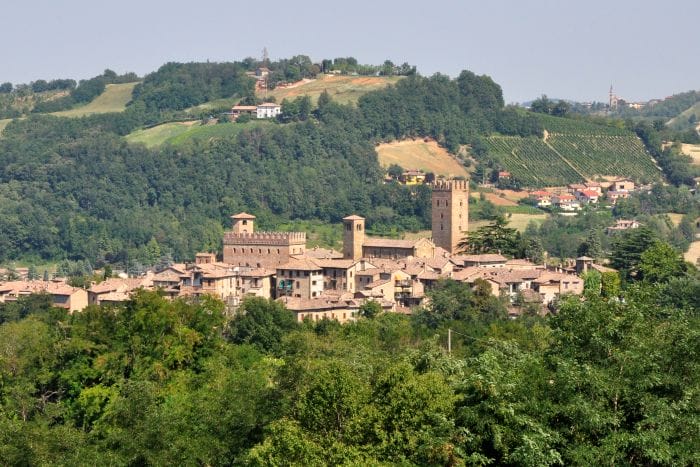
Castell’Arquato, one of the beautiful castles of Emilia-Romagna.
Academic Prowess: Home to Europe´s oldest university
Oxford and Cambridge, move aside: The oldest university in Europe is actually in Bologna, in the heart of the Emilia-Romagna region. Founded in 1088, the University of Bologna has had such illustrious alumni as Albrecht Durer, Copernicus, Pope Alexander VI, Petrarch, and Dante.
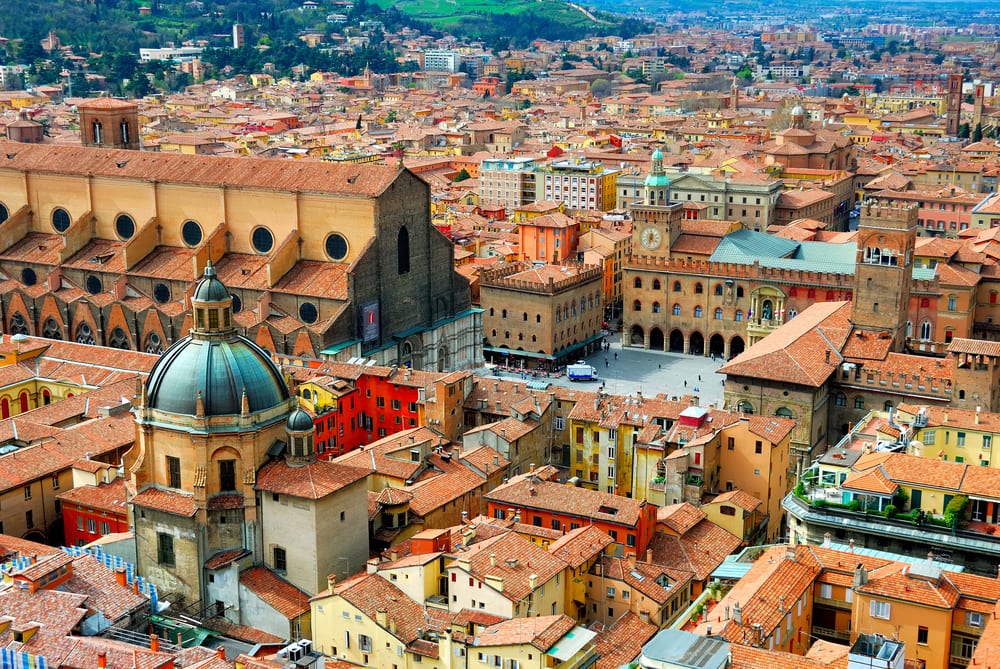
The graceful, medieval city of Bologna still buzzes with student life and academic fervor.
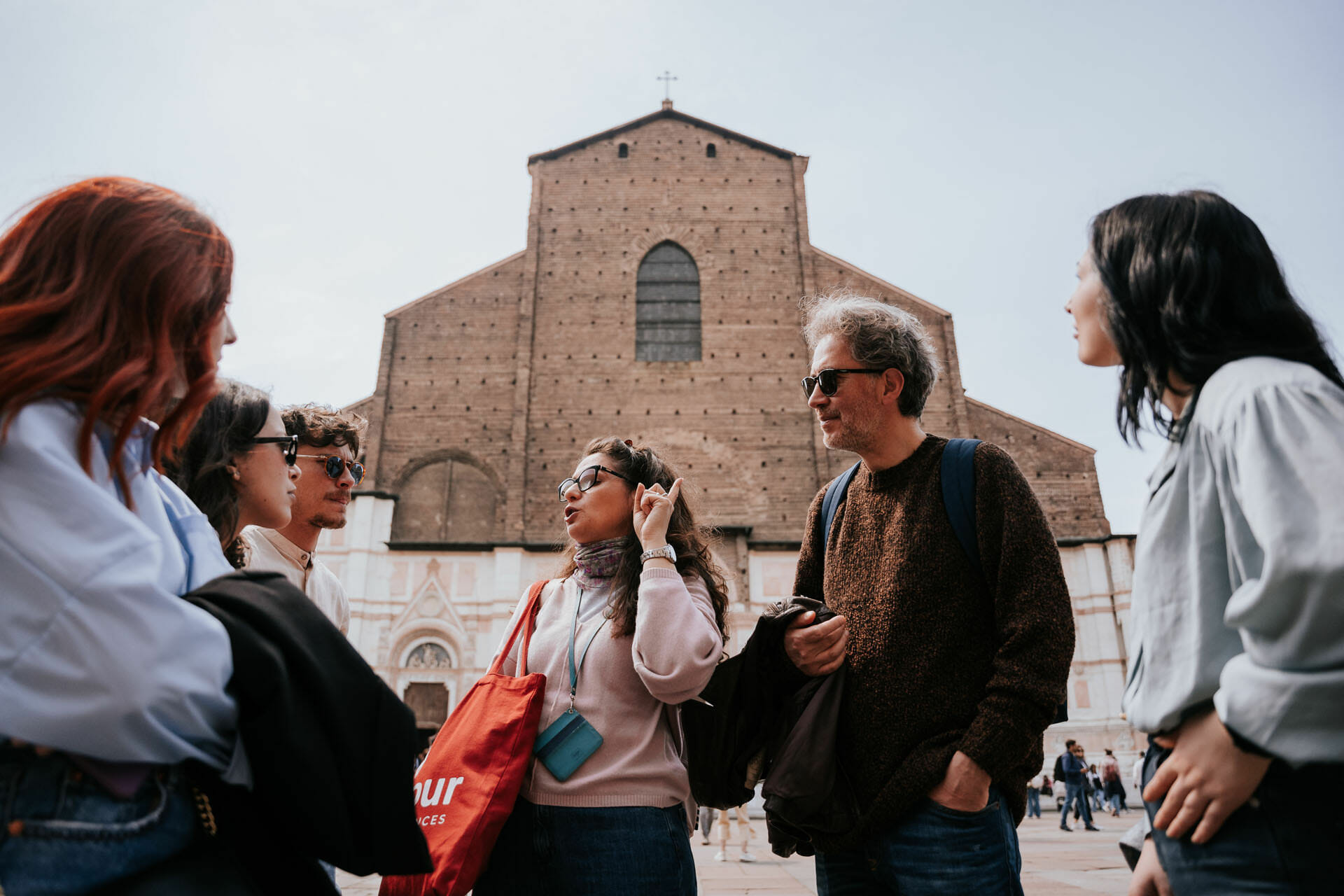
Beautiful Bologna, home to Europe’s oldest university.
World-famous Foods: From Parma ham to Parmigiano-Reggiano
Every region in Italy has its own characteristic cuisine. But you know the food in Emilia-Romagna is cuisine to contend with when even Italians who aren’t from the region say it’s Italy’s best food.
After all, many beloved Italian food products originate from, and are only properly made in, the region: prosciutto di Parma, Parmigiano-Reggiano (parmesan) cheese, balsamic vinegar of Modena, and mortadella di Bologna – changed into “baloney” back home – to name a few. That’s not to mention other regional specialities, like tortellini and lasagna!
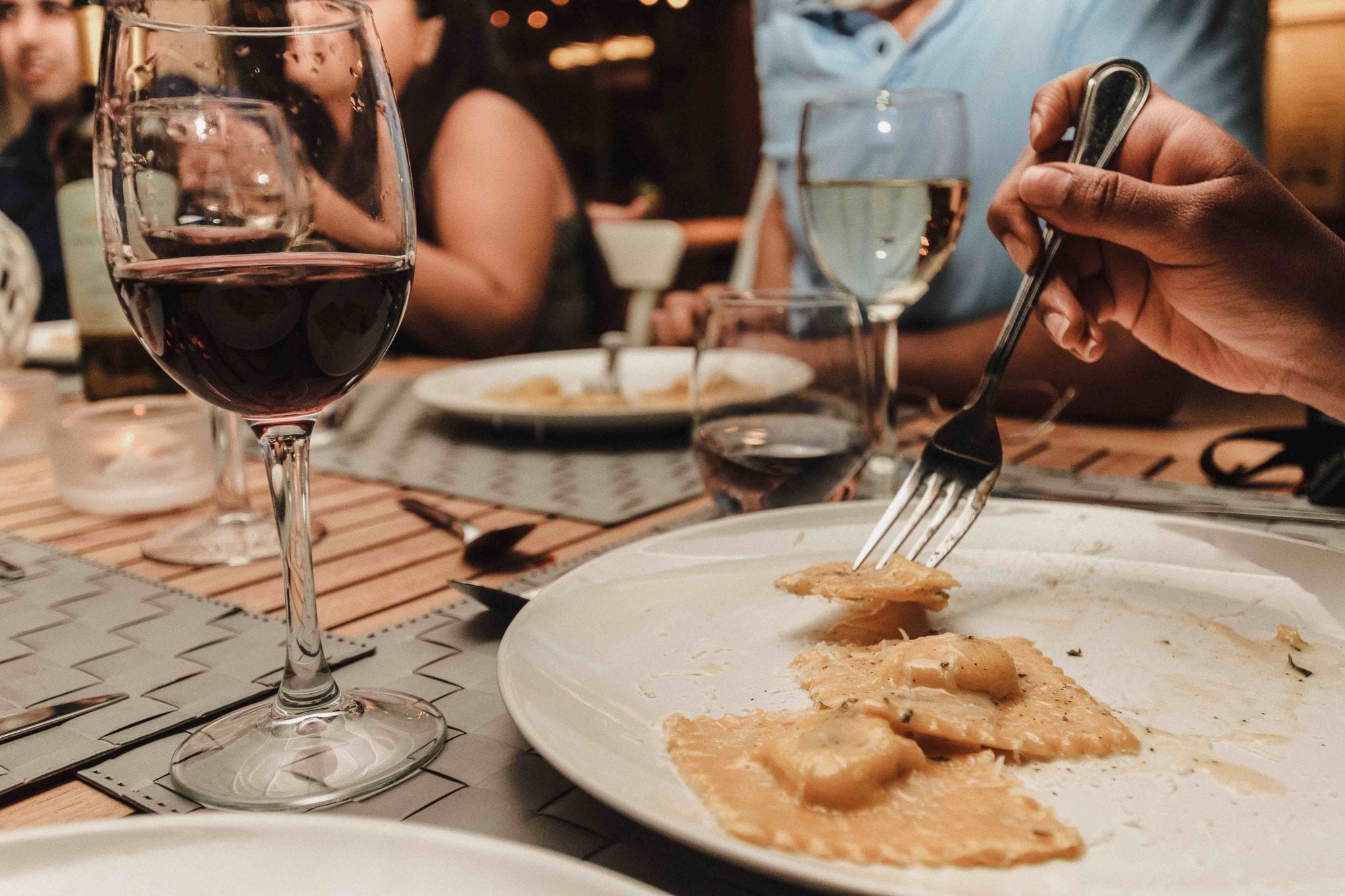
You’ll definitely eat well in Emilia-Romagna!
Fast cars: Ferrari, Lamborghini, Maserati and Ducati
Are you a sports car-enthusiast? Then get to Emilia-Romagna, fast! The small area here known as “Motor Valley” is home to some of Italy’s most famous car makers, including Ferrari, Lamborghini, Maserati, and Ducati.
The founder of Ferrari was born in Modena, so it’s no surprise that the Ferrari factory, race track, museum and shop all are located in Maranello, just outside the city. The Lamborghini factory is located just 20 miles from Bologna, also very near Modena, and has a Lamborghini museum. Maserati, based in Modena since 1940, also has Maserati factory tours and a Maserati museum. Can’t get enough cars? the Ducati Museum is located in nearby Bologna.
Insider tip: You can visit all 4 car-makers on a trip here, here are the useful links for any car fan: Ferrari factory, Lamborghini museum, Maserati factory tours, Ducati Museum.
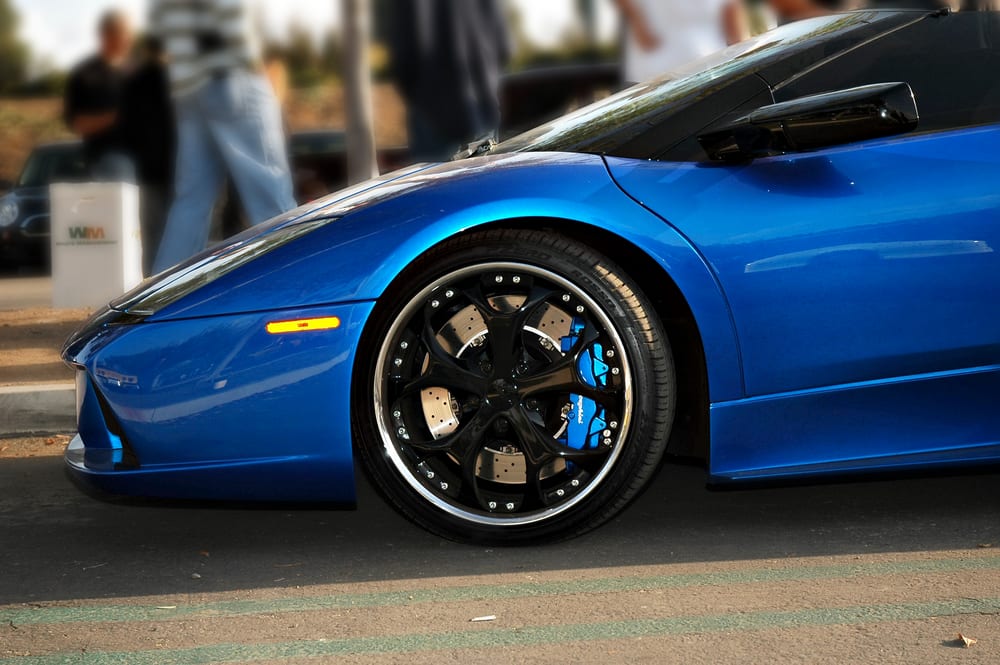
Love fast cars? Then don’t miss the Lamborghini museum and factory in Emilia-Romagna. Photo credit: Shutterstock
World Heritage Cities: From Modena to Ferrara
When you picture Italy, do you imagine gorgeous Renaissance domes, winding medieval streets, and graceful palaces? Then you can’t miss the cities in Emilia-Romagna which is full of beautiful medieval and Renaissance cities and art.
Modena still has many buildings original to the 10th and 11th centuries, including its extraordinary Duomo, and a 17th-century ducal palace and town hall.
Ferrara, an independent and powerful duchy, became one of Italy’s best-known cities by the 15th century and remains circled today by some of the best-preserved medieval walls in Italy. Both of these Emilia-Romagna towns are World Heritage Cities.
Bologna also flourished, politically and artistically, throughout the Renaissance, with the artists of the Bolognese School including such heavy-hitters as Annibale Carracci, Domenichino, and Guercino. The town still has its medieval towers and Renaissance palaces.
And Parma, with its Romanesque duomo, Gothic churches, and graceful Renaissance palaces and theaters, is worth visiting for more than its famous prosciutto!
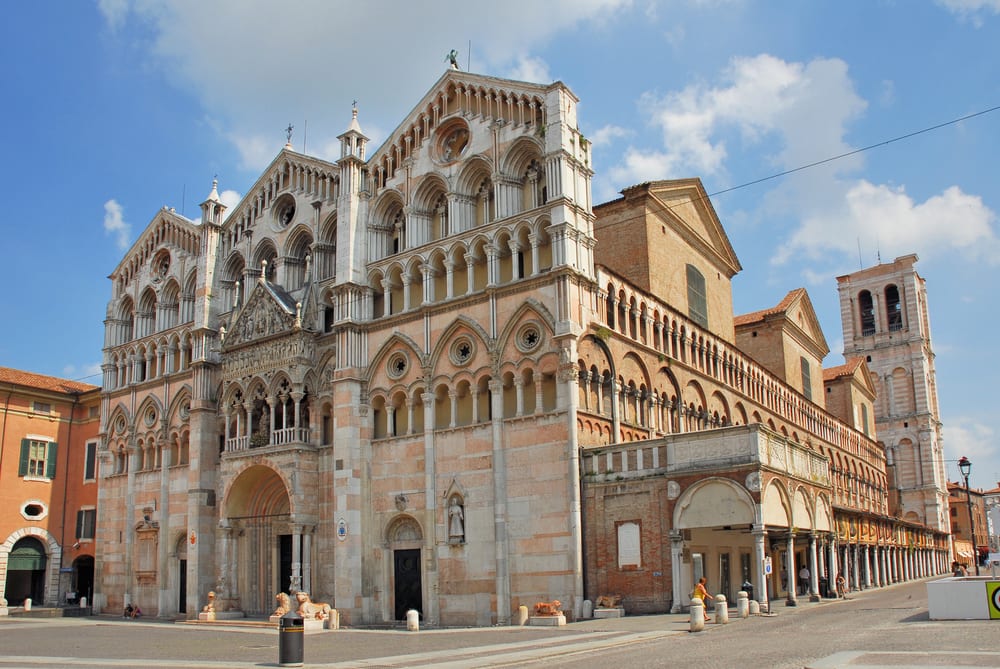
Seeing Ferrara’s Cathedral of St. George is a must when visiting Emilia-Romagna.
Natural Gems: Mountains, beaches, caves and springs
Although the region is famous for its medieval and Renaissance cities, it also has spectacular natural gems. Emilia-Romagna extends to the Adriatic sea, meaning gorgeous stretches of beach on the coast. But, geographically, the area couldn’t be more diverse: there are the Appenine mountain range, marshes, forests, caves, and springs.
And many of those natural areas have been protected; the region has two national parks, 14 regional parks and 11 regional reserves. So if you’re after hiking, camping, mountain-biking, caving, or any other outdoor activities, Emilia-Romagna is a fantastic place to head.
Insider tip: Taking a dip in the area’s thermal baths is a very popular way to relax, like at Bagno di Romagna or Salsomaggiore.
The region that inspired Verdi and Toscanini
Born in 1813 in Roncole di Busseto, Emilia-Romagna, Verdi was one of the greatest Italian composers of all time. One hundred years later, the rising star of Italian opera was Toscanini, and he, too, is a native of Emilia-Romagna, born in Parma.
If you’re a fan of Verdi´s soaring music, there are some stops you have to make in Emilia-Romagna. Like at the National Museum of Giuseppe Verdi, located in a graceful 16th-century palazzo in Busseto. Or his childhood home, the mansion where Verdi had his first public performance, or the palazzo he purchased once he’d become wealthy.
Insider tip: Catch a performance at the Verdi Theatre in Bussetto, built in the composer’s honor.
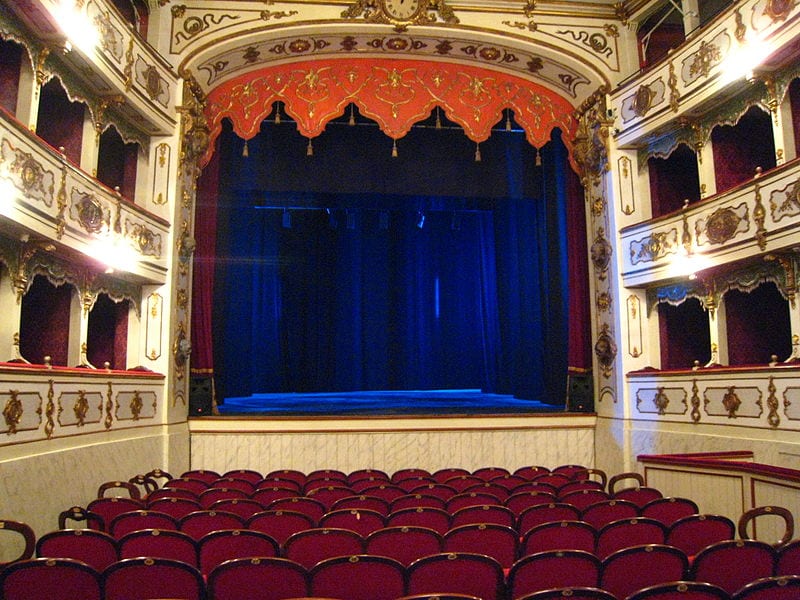
The Verdi Theater in Busseto, Emilia-Romagna
The most important mosaics in Italy
Many of the most spectacular, and important, mosaics in Italy are in one city in Emilia-Romagna: Ravenna. Since Ravenna was (briefly) the capital of the Roman empire after the empire had become Christian, the city’s churches and mausoleums were decorated with the most opulent mosaics possible. Many are still well-preserved today, and just as spectacular as they were in the 6th and 7th centuries.
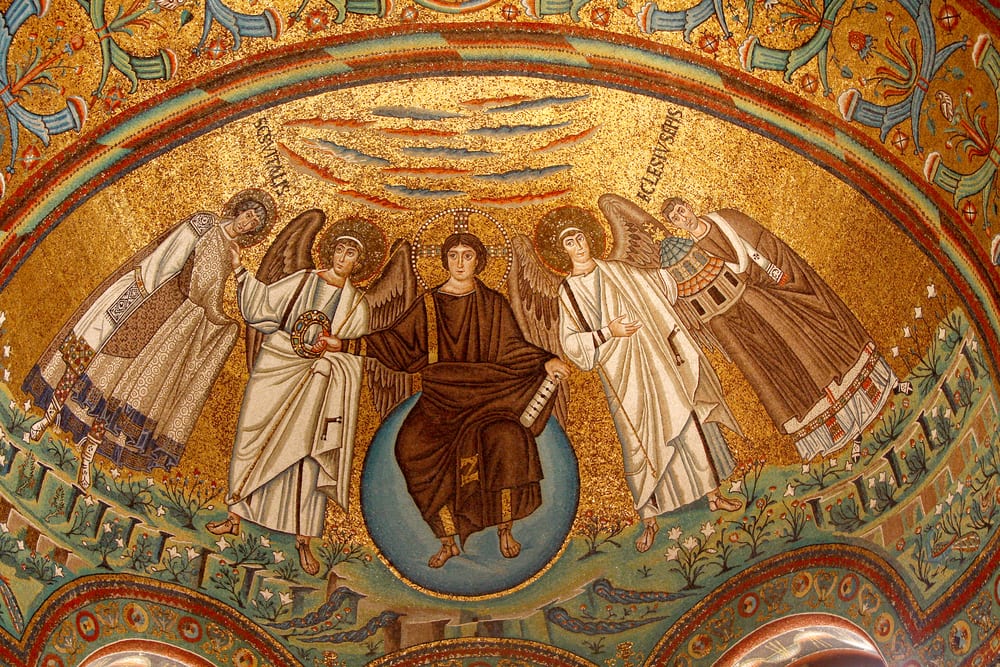
Gorgeous mosaic in San Vitale in Ravenna.
FAQs – Visiting Emilia-Romagna
What is the best way to get around Emilia-Romagna?
The train is an excellent way to travel between the region’s major cities, including Bologna, Modena, Parma, and Ravenna. For smaller towns, castles, food producers, and countryside attractions, renting a car gives you much more flexibility.
How many days do you need in Emilia-Romagna?
Allow at least three or four days to experience the highlights, although a week gives you time to explore more of the region at a relaxed pace. Bologna makes a convenient base, with many of the region’s major cities and attractions easily accessible as day trips.
When is the best time to visit Emilia-Romagna?
Spring and fall are particularly pleasant, with comfortable temperatures for sightseeing and exploring the countryside. Summer is ideal for the Adriatic coast but can be hot inland, while winter brings cooler weather but fewer tourists and a chance to enjoy the region’s famous hearty cuisine.
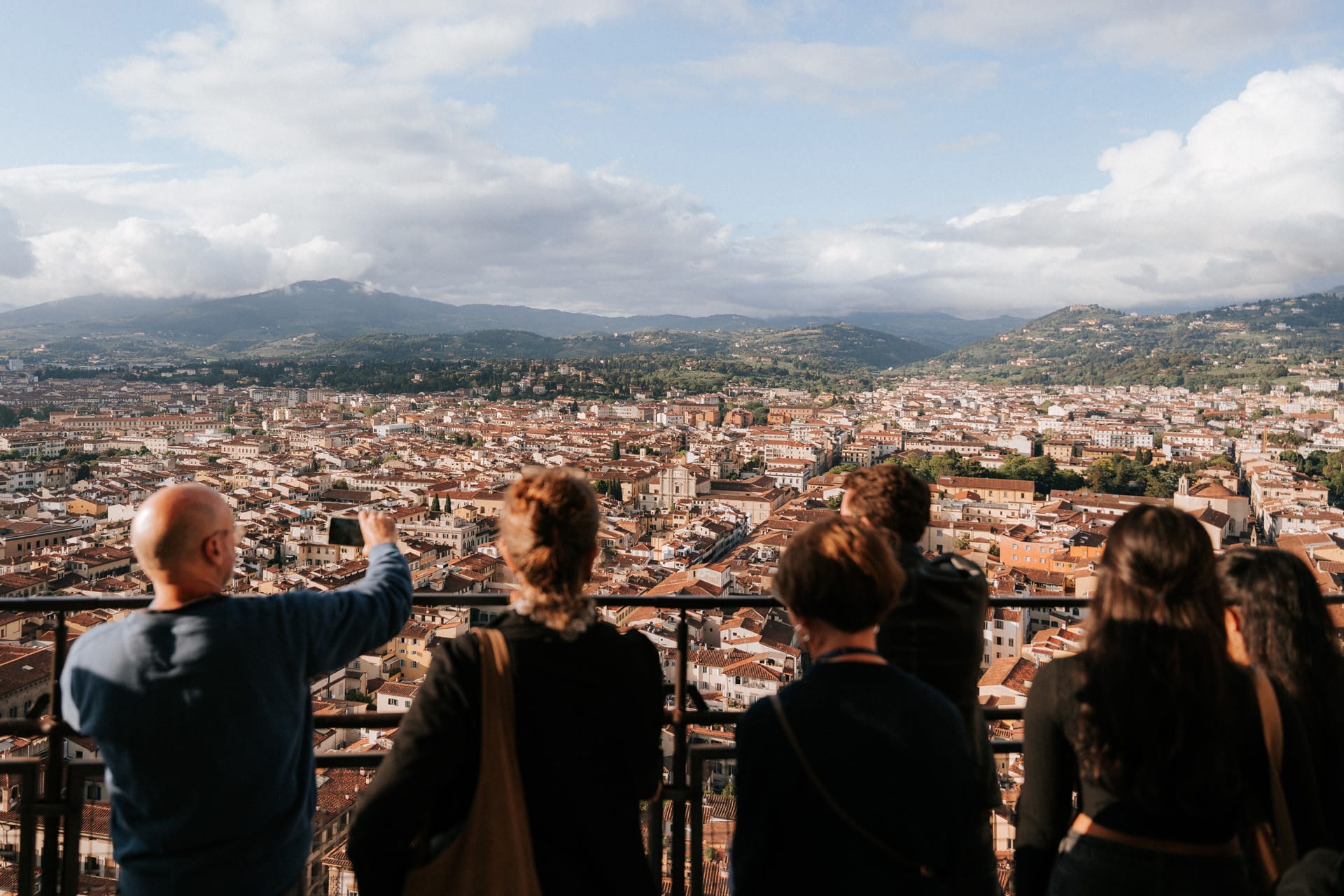
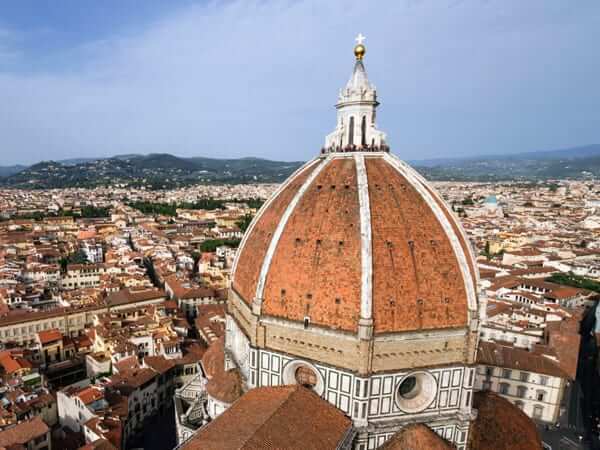
The breathtaking view of Florence’s terracotta rooftops and surrounding hills from the dome’s summit.
If you’re exploring Emilia-Romagna, don’t miss the chance to add Florence to your itinerary. Just 91 km from Bologna, Florence is only 37 minutes away by high-speed train, making it an easy day trip or a natural next stop on your Italian adventure.
Once there, make the most of your time with a guided tour from Walks of Italy. From Michelangelo’s David and Brunelleschi’s magnificent Duomo to the masterpieces of the Uffizi, expert local guides bring Florence’s extraordinary Renaissance history to life while pre-reserved access helps you spend less time waiting and more time exploring.
Ready to discover Florence? Explore Walks of Italy’s Florence tours and find the perfect experience for your trip.

Book a Tour

Pristine Sistine - The Chapel at its Best
€89

1794 reviews

Premium Colosseum Tour with Roman Forum Palatine Hill
€56
850 reviews
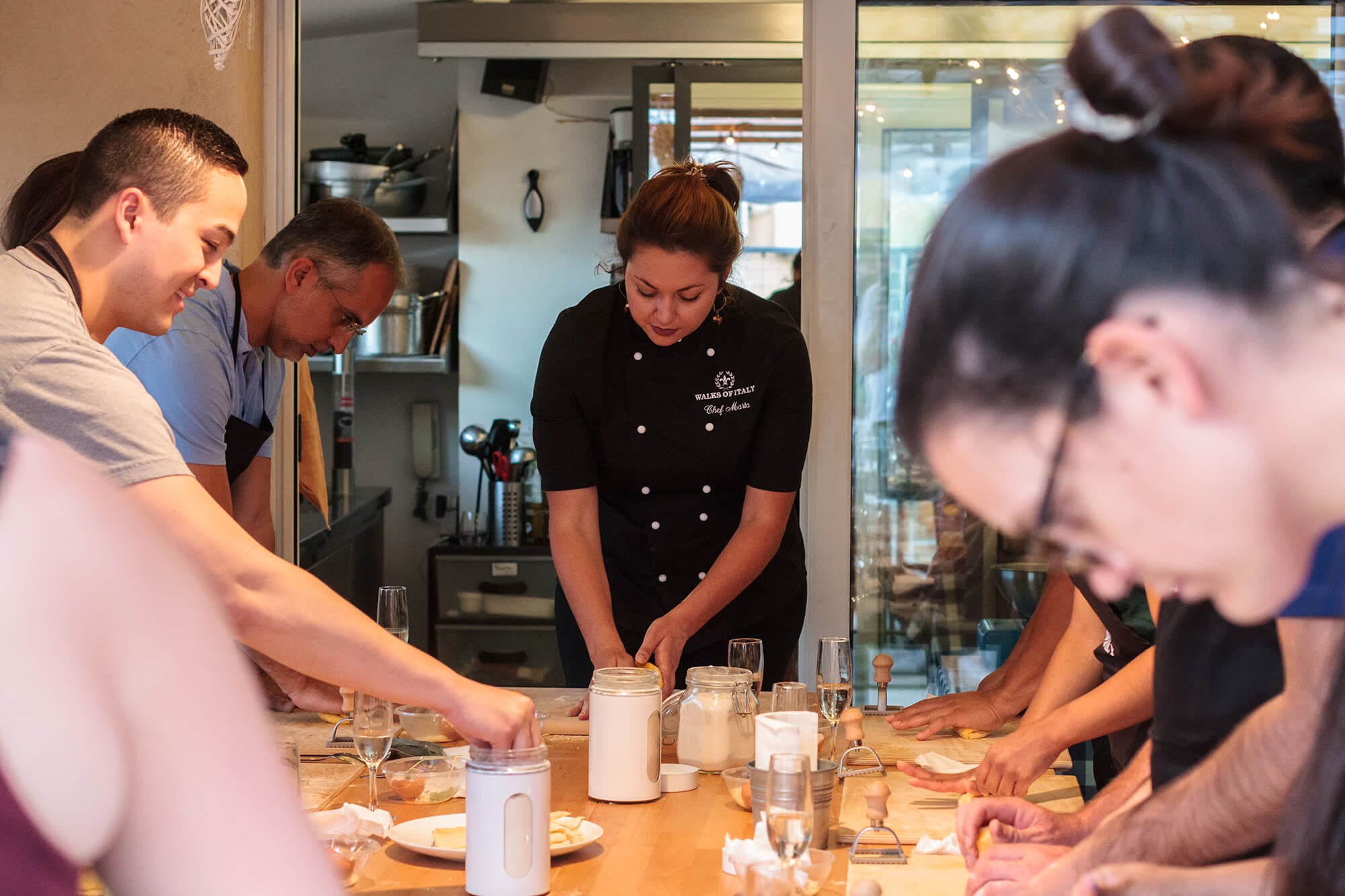
Pasta-Making Class: Cook, Dine Drink Wine with a Local Chef
€64
121 reviews

Crypts, Bones Catacombs: Underground Tour of Rome
€69
401 reviews

VIP Doge's Palace Secret Passages Tour
€79
18 reviews

Legendary Venice: St. Mark's Basilica, Terrace Doge's Palace
€69
286 reviews
Follow us
Stay up to date with travel tips, local insights and all things Italy on our social channels!


Subscribe to our Newsletter
Get curated Italy travel tips delivered to your inbox!

