
Snow in Italy: 3 Winter Wonderlands Worth Visiting
August 28, 2026
Few places are more magical than Italy in winter. In the south, the coastline remains beautiful, the temperatures relatively mild. In Rome, Florence and Venice, crowds are less, making it the perfect time to visit the Sistine Chapel or Uffizi in relative tranquillity. And some places in Italy, are filled with snow when winter rolls around. Here, our picks for three favorite winter wonderlands to experience the magic of the snow in Italy.
Where to Enjoy Snow in Italy
1. The Dolomites: Snow, Skiing and Tyrolean Flavor
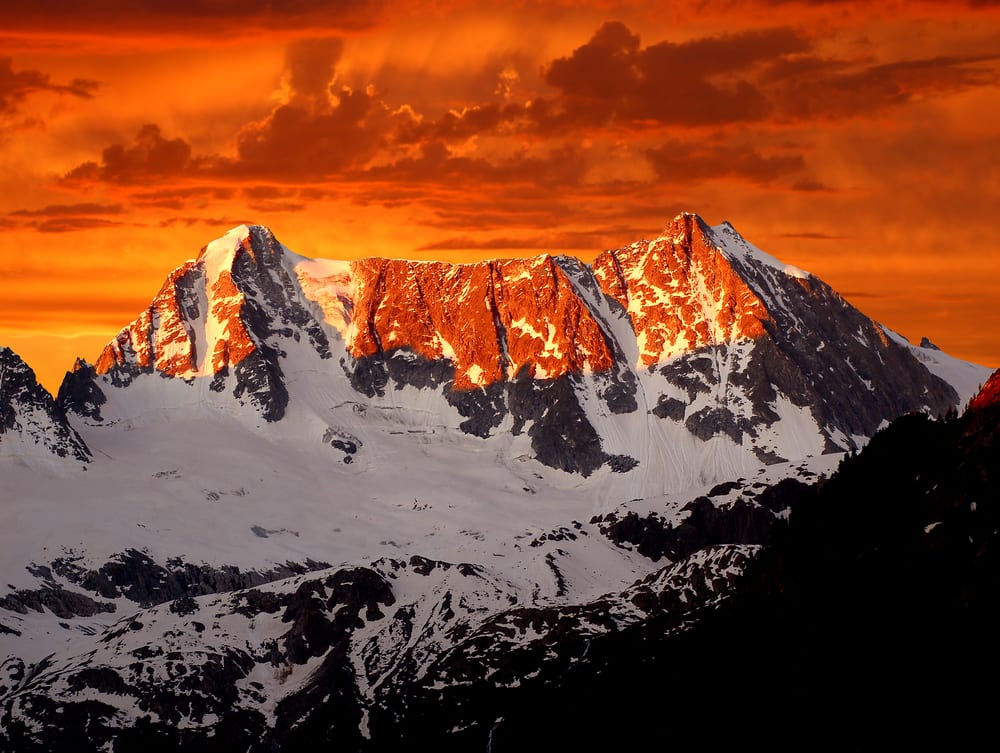
Sunrise over the glacier of Presanella—at 11,673 feet, the highest peak in Trentino!
Ask any skier where they’d like to go to enjoy the snow in Italy, and their answer is likely to be immediate: the Dolomites. Since the mountain range has some tough competition in a country also known for the Appenines and the Alps, that means it must be pretty special. And it is.
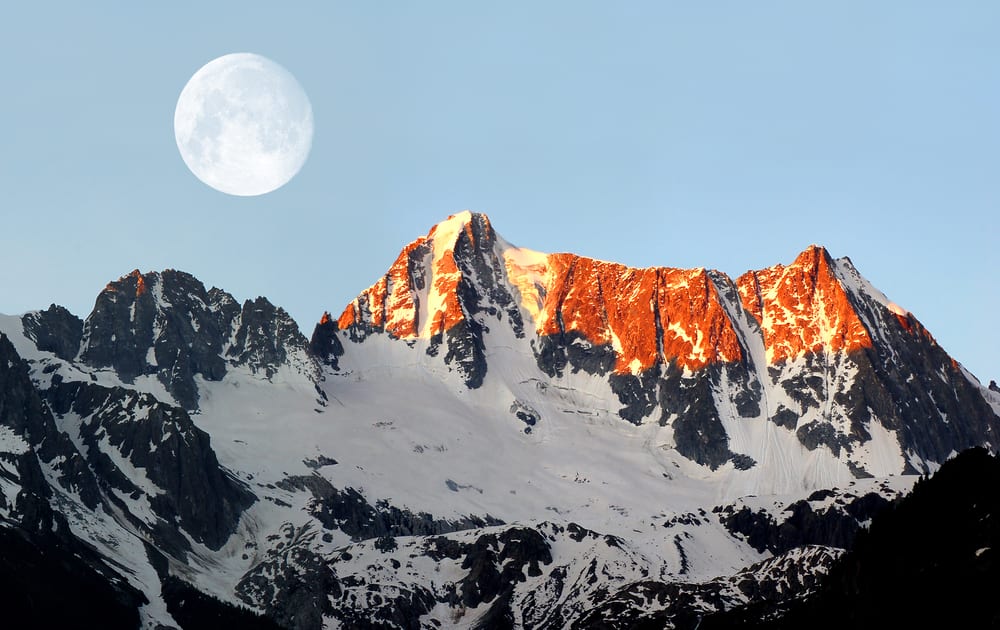
Firstly, the Dolomites, which run through the provinces of Belluno, South Tyrol and Trentino in Italy’s northeast, are breathtaking. Made of dolomite rock, they turn pink in the late afternoon, an unusual effect (known to Italians as enrosadira) that enchants even flatland-lovers.
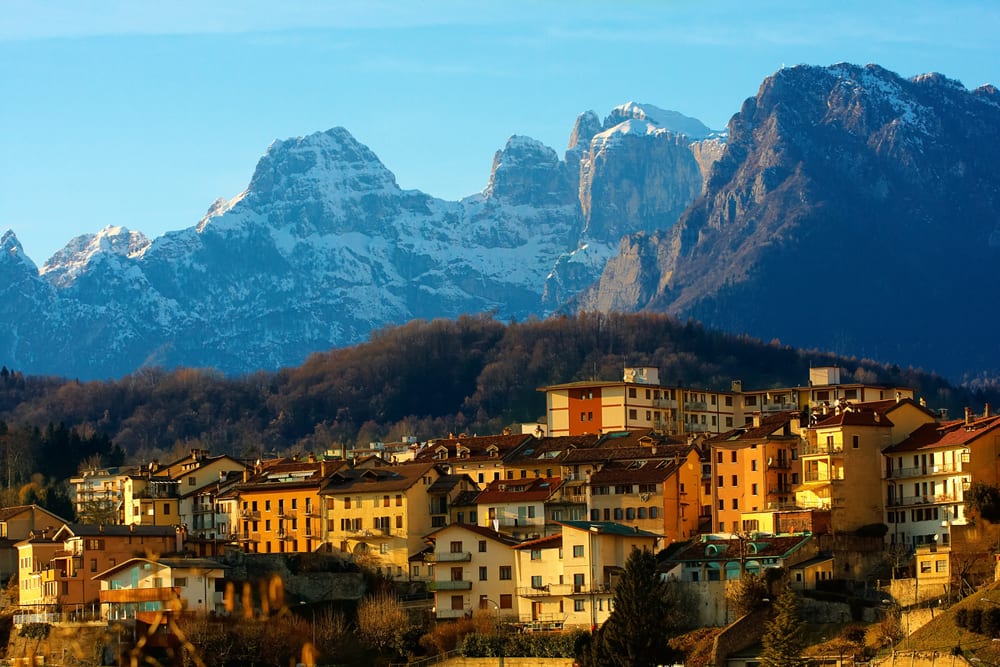
The town of Belluno, glowing in the enrosadira!
Second, they have some of Europe’s best skiing, including at the world-famous resort Cortina d’Ampezzo. Said to be Italy’s most glamorous alpine escape, this is a world-famous resort town nestled among the dramatic peaks of the Dolomites. Known for its stylish boutiques, legendary ski slopes, and cinematic scenery, Cortina blends high-altitude adventure with classic Italian elegance.
And third, they have a fascinating hybrid culture, one as much Austrian and “Tyrolean” as it is Italian, that makes it all-but-impossible for songs from The Sound of Music not to run through any visitor’s head. Along with skiing, the Dolomites boast tons of opportunities for hiking, climbing, and snow-shoeing. Not to mention for snuggling up over schnapps in a Tyrolean-style bar.
Fun fact: One interesting effect of the area’s history is that most locals speak German, not Italian!
2. Turin: At the Foothills of the Alps
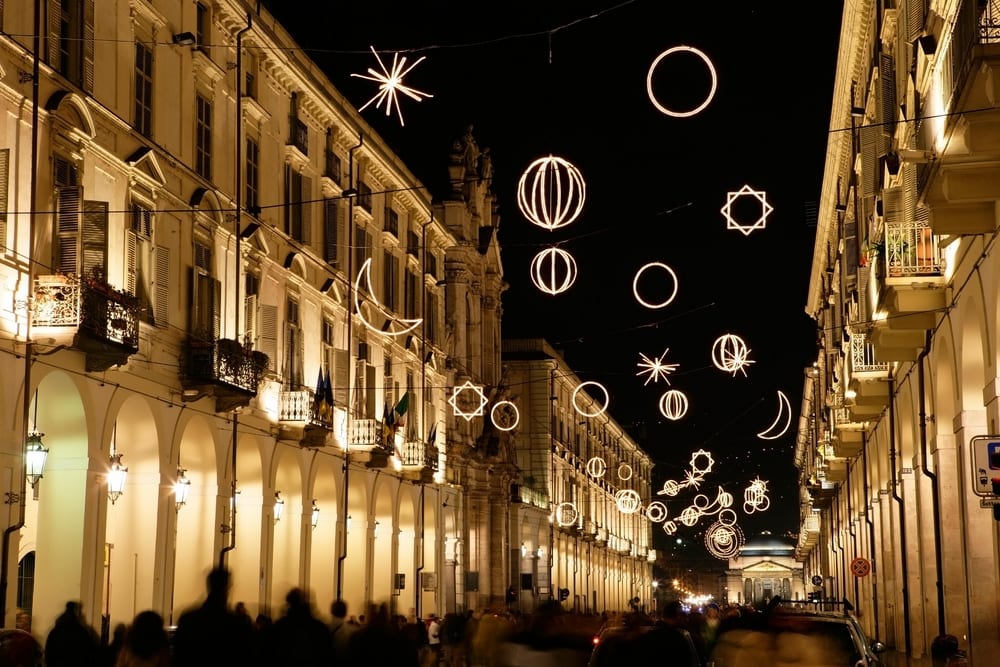
Turin on a winter’s night: lit-up and lovely
Turin – or, as Italians call it, “Torino”- is one of the most cultured cities in Italy. Whether you’re looking for world-class museums, theaters, shops, or cafés, Turin is a perfect place to while away the winter days, and nights. In Turin, there’s an activity for everyone.
A car-lover? A major center of the Italian auto industry, Turin has the Museo dell’Automobile, with everything from one of the first FIATs to the Isotta Franchini from Sunset Boulevard on display.
Film fan? Don’t miss the Museo Nazionale del Cinema, with movie memorabilie from Marilyn Monroe’s bustier to Peter O’Toole’s robe from Lawrence of Arabia.
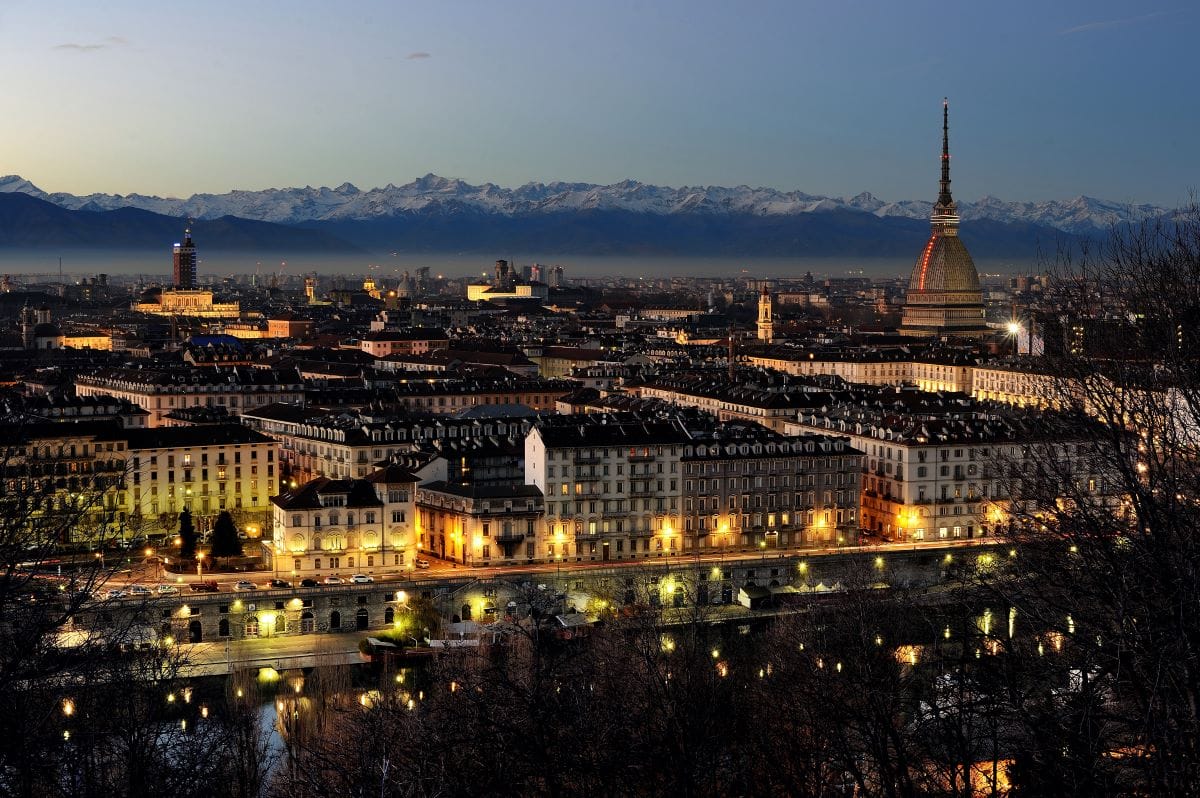
The city of Turin, illuminated at night, with the snowy peaks of the alps as its breath-taking backdrop!
Enjoy art? Opportunities abound, from the Impressionist works (Renoir, Manet, and Matisse, oh my!) at the Pinacoteca Giovanni e Marella Agnelli to works by Klee and Dix at the Galleria Civica d’Arte Moderna e Contemporanea to the Old Masters (hello, Rembrandt and Tintoretto) at the Galleria Sabauda.
Then there are the opulent interiors of Turin’s many palaces (the city was the official residence of the royal House of Savoy), its fame as the location of the Holy Shroud, and its renowned Teatro Regio, an 18th-century opera house that debuted Puccini’s “La bohéme.” (Opera season is winter and early spring, of course, so for that, you’re especially here at the right time!).
Insider tip: If you´re looking for a winter trip and want to experience more than just snow in Italy, check out Winter in Italy – our guide to visiting Italy in the off-season for more advice and tips.
3.Valle d’Aosta
This little-known (and little!) region in Italy’s northwest, tucked between Switzerland, France, and Piedmont, is beautiful in the summer. But, it’s definitely one of the best places to visit in Italy in winter, and one of the top places for snow in Italy.
With a culture (and a cuisine) that’s equal parts French, Swiss, and Italian, the area’s most striking feature is its mountains. The two highest peaks in the entire Alps are located here, both clocking in at more than 15,000 feet. Every children’s-book illustration you’ve ever seen of snow-capped mountains towering over idyllic, church-topped villages comes true in the Valle d’Aosta.
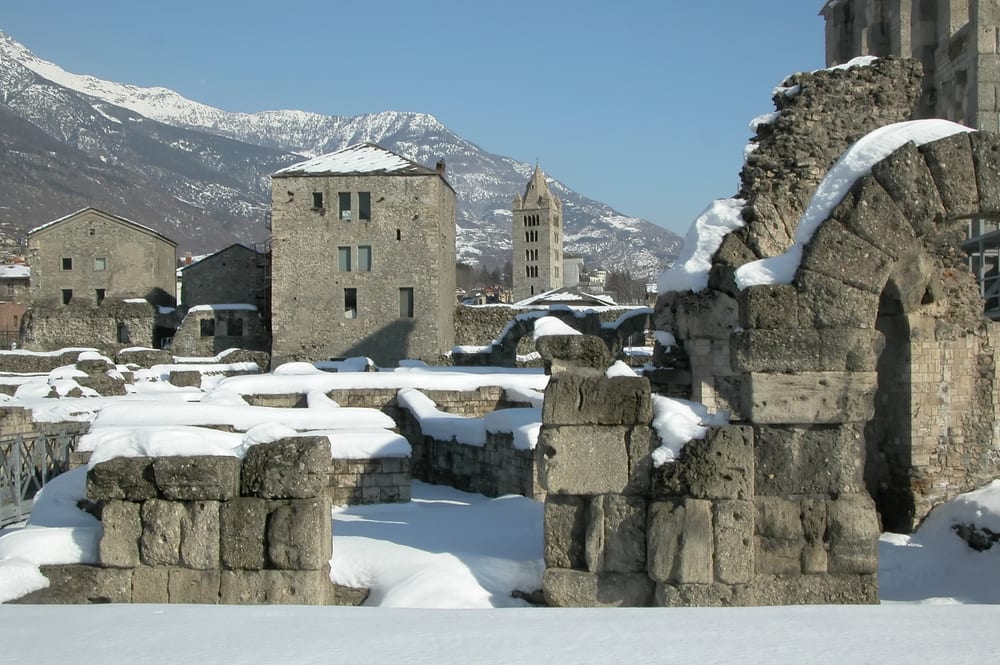
Snow on the Roman ruins in Aosta
But that’s not all there is to the region. Since Emperor Augustus founded its main town, Aosta, 2,000 years ago, the region also features numerous ancient Roman ruins, some fairly spectacular. Medieval castles are thick on the ground, too. And, lest we forget, the skiing is top (here’s where Cervinia/Zermatt and Courmayeur/Mont Blanc are located, among other resorts)
The Best Time to See Snow in Italy
If your main goal is to see snow in Italy, timing matters. In the Alps and Dolomites, the most reliable snow conditions are generally found from December through March, with January and February usually offering the best combination of cold temperatures and established snow cover. At higher elevations, the ski season can extend into April, particularly when conditions are good.
December can be magical, with snow-covered villages and Christmas markets, but early-season snowfall can vary from year to year. January and February are your safest bets for a classic Italian winter wonderland, particularly if you want to ski, snowshoe, or simply enjoy snowy mountain scenery.
The lower you go, the less predictable the snow becomes. Cities such as Turin can see occasional snowfall, but don’t visit expecting a permanent blanket of white. For the best chance of finding snow in Italy, head into the mountains and choose a destination at higher elevation.
What to Bring for Snow in Italy
If you’re heading into the Italian mountains in winter, packing for the cold is essential. Even if you’re not skiing, you’ll want to be prepared for freezing temperatures, snow and potentially icy paths.
- Start with layers. A thermal base layer, warm sweater or fleece, and a good insulated winter jacket will give you flexibility as temperatures change. You’ll also want waterproof walking boots with good grip, particularly if you’re planning to explore snowy villages or go hiking.
- Don’t forget the smaller things, either. Warm socks, gloves, a hat and a scarf can make a surprisingly big difference when you’re outside for several hours.
- Sunglasses and sunscreen are also essential: snow can reflect strong sunlight, even when the air feels bitterly cold.
- If you’re planning to ski, board or snowshoe, you’ll need more specialized equipment. Most Italian ski resorts have rental shops where you can hire skis, boots, poles, helmets and other gear, so you don’t necessarily need to bring everything from home.
Fashion tip: If you want to combine staying warm with a love of Italian fashion, look no further than our guide on how to Dress Like an Italian in Fall/Winter.
One final and vital tip on taking a trip when there is snow in Italy… always check the weather and mountain conditions before setting out! Snow and ice can make roads, hiking trails and public transport more unpredictable, so allow extra time and don’t rely solely on the weather forecast for the nearest city.
Snow activities in Italy: You Don’t Have to Be a Skier
An important point to note is that you don’t have to be into snow sports to enjoy the snow in Italy. The Italian Alps and Dolomites offer plenty of ways to experience a snowy landscape without strapping on a pair of skis or snowboard.
Snowshoeing, winter hiking, sledding and even scenic cable-car rides can all put you right in the middle of a spectacular Italian winter wonderland. In the Dolomites, snowshoeing is a particularly enjoyable way to explore quiet forests and mountain trails, while resorts such as Cortina d’Ampezzo offer plenty of winter activities beyond skiing. The Aosta Valley is another excellent choice for snowy mountain scenery in Italy, with opportunities for snowshoeing and winter walks beneath some of the highest peaks in the Alps.
Don´t underestimate the simple pleasure of being somewhere covered in snow. Wander through a snow-covered mountain village, ride a cable car above the clouds, stop for a hot chocolate or warming glass of vin brulé, and enjoy the spectacular scenery. For many visitors, experiencing snow in Italy is as much about the atmosphere as it is about winter sports.
FAQs – Snow in Italy
How expensive is it to visit Italy’s snowy regions in winter?
Prices vary widely depending on where you go. Major ski resorts like Cortina d’Ampezzo or Courmayeur tend to have higher accommodation and lift-ticket costs, especially during Christmas and New Year’s weeks. Smaller towns in the Dolomites or Aosta Valley offer better value, with more affordable hotels and local trattorie. Booking early can help secure lower rates, as winter weekends and holidays fill quickly.
What’s the easiest way to reach snowy destinations like the Dolomites, Turin, or the Aosta Valley?
For the Dolomites, the nearest major airports are Venice (VCE), Treviso (TSF), and Verona (VRN); from there you can rent a car or take regional buses to mountain towns.
Turin is extremely well connected via Turin Airport (TRN) and fast trains from Milan.
For the Aosta Valley, the most convenient arrival points are Turin (TRN) or Milan Malpensa (MXP), followed by a scenic train or bus journey into the mountains.

A view onto Langkofel Dolomites mountain peak on the Seiser Alm, South Tyrol, Italy in winter.
Ready to make your Italian winter escape truly unforgettable?
Walks of Italy offers expert-led tours that bring the country’s art, history, and hidden stories to life — whether you’re wandering Venice’s festive alleys, exploring Rome without the crowds, or discovering Florence’s masterpieces in winter tranquillity. Don’t just visit Italy, experience it.
Browse the full range of tours at Walks of Italy and reserve your spot today. Your perfect Italian adventure is only a click away!

Book a Tour

Pristine Sistine - The Chapel at its Best
€89

1794 reviews

Premium Colosseum Tour with Roman Forum Palatine Hill
€56
850 reviews

Pasta-Making Class: Cook, Dine Drink Wine with a Local Chef
€64
121 reviews

Crypts, Bones Catacombs: Underground Tour of Rome
€69
401 reviews

VIP Doge's Palace Secret Passages Tour
€79
18 reviews

Legendary Venice: St. Mark's Basilica, Terrace Doge's Palace
€69
286 reviews
Follow us
Stay up to date with travel tips, local insights and all things Italy on our social channels!


Subscribe to our Newsletter
Get curated Italy travel tips delivered to your inbox!

