








For a long time, agriturismi have been one of Italy’s best-kept accommodation secrets. But what is an agriturismo? Well, the Italian word agriturismo refers to a single farm stay, while agriturismi is the plural form used to describe farm stays. So, at its simplest, it’s a farm stay, but that description barely captures what makes these places special.
Many are working farms where you can stay among vineyards, olive groves, orchards or fields, often enjoying home-grown produce and a slower pace of life. They can range from rustic rural retreats to beautifully restored farmhouses with pools and comfortable modern rooms. More than just somewhere to sleep, an agriturismo can offer a chance to experience Italy’s countryside, food and traditions at close quarters.
Here, we explore what makes them special, tackle three common myths, and reveal one often-forgotten truth about Italy’s farm stays.
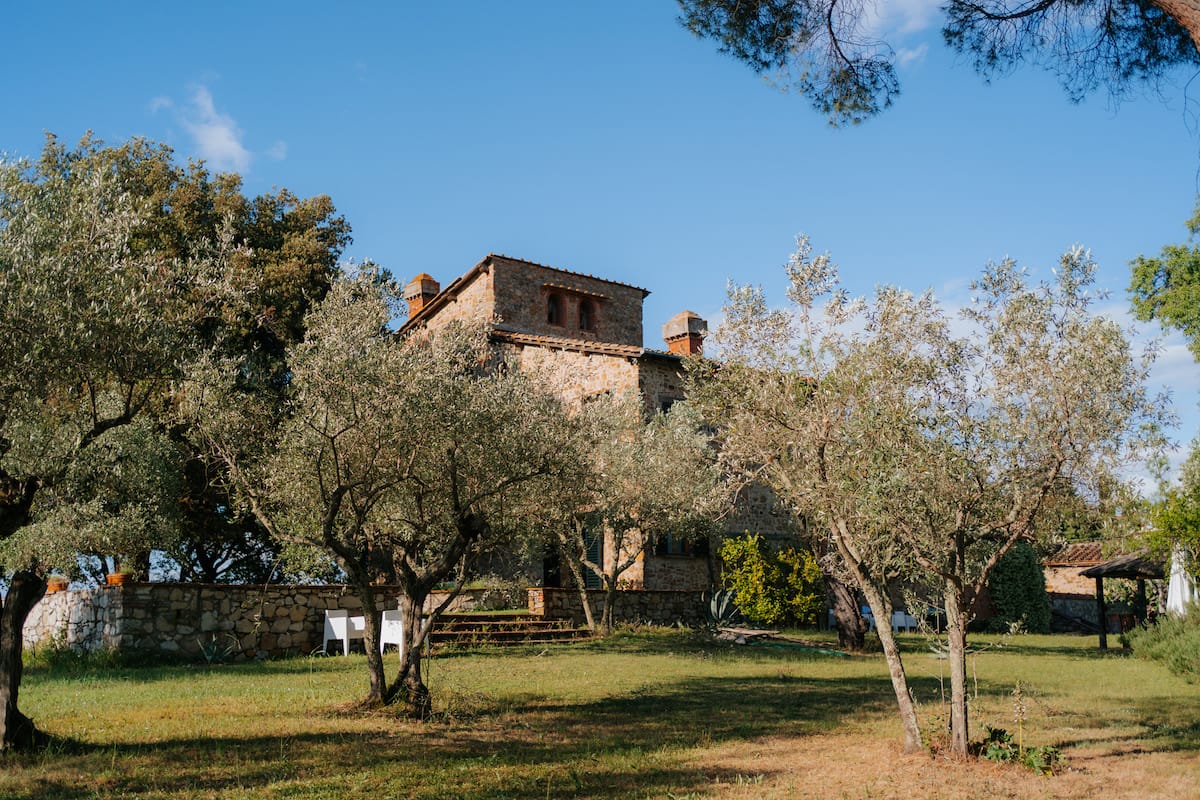
A rural agriturismo surrounded by olive trees in a field in Tuscany.
What is an agriturismo?
Typically, an agriturismo is an independently-owned farm that the owners have decided to use (although usually only partially) for accommodation purposes. Like a traditional B&B but in a rural setting, with your room in the farm’s house, or a converted barn or annex built nearby. And most of the time, you can expect that the owners of your “hotel” are, primarily, farmers. (Or people who have someone else farm for them).
Unsurprisingly, the whole thing tends to feel rather informal: There’s rarely a reception area (or even other guests), you’re woken up by roosters, and you can often call just a couple of days in advance and still be accommodated.
Rooms also completely range, from large, independently-built mini-apartments to cozy, basic rooms in the bigger house. It’s important to note, though, that in our extensive agriturismi experience, we’ve yet to be experience a room that was unclean or too expensive for what it was.

A typical agriturismo room – cozy, clean, and cute!
What are the best things about staying in anagriturismo?
The Setting
Agriturismi are, of course, in Italy’s gorgeous countryside, and they’re really everywhere. (Don’t believe us? Just go to Google maps for Italy and type in “agriturismo”). So whether you want to see Tuscany’s rolling vineyards or Le Marche’s rocky hills, there’s an agriturismo out there that will let you wake up, roll out of bed… and see exactly that. Probably with flowers, animals and complete solitude, too.
The Food
At most farm-stays, your price per night gets you breakfast and an evening meal – made from the produce and often wine and olive oil that’s fresh off the farm. (The eggs for breakfast are undoubtedly laid by the chickens that woke you up that morning). And, since many of Italy’s best food traditions aren’t found in swanky restaurants, but in nonna’s house in the countryside, there’s often no better dining than at an agriturismo.

From bruschetta to pasta, almost every dish in Italy uses a healthy heaping of olive oil.
The People
One of the best ways to experience Italy is to get to know its people. And what better way to break the ice than to actually be staying at someone’s own farm?
You’re often welcomed into a place that is not simply a business but part of a family’s life and livelihood. You might meet the people who grow the olives, tend the vines or produce the cheese on your table, and have the chance to learn about the traditions that have shaped the local countryside.
It’s a more personal experience than a conventional hotel stay, giving you an opportunity to see how people live, work and eat beyond Italy’s busy cities and tourist centres.

Meeting the people who call this place home is a great way to discover more about local food and traditions!
So, if it’s not clear already, we love agriturismi! And we can’t imagine better accommodation value for the money. Compared to spending 250€ for a hotel room and dinner for two in Florence, you could spend 100€ and stay in the Tuscan hills, with incredible fresh food to boot.
Despite how great they are, though, some myths about agriturismi still abound. Here, three stereotypes of agriturismi that aren’t really the case… and one truth that not many people think about.
Myths about staying at an Agriturismo
Myth #1: You have to stay for a week to experience an agriturismo
Nope! While some farm-stays have a minimum three-nights’ (or more) stay, we’ve found that the vast majority will allow you to stay for just one night. Just make sure you call at least a couple of days ahead so they can make the necessary arrangements.
Myth #2: Staying at a family’s farm isn’t good if you want some privacy
We don’t agree. At most of the farm-stays we’ve been at, the owners have been super-friendly and accommodating, but completely unintrusive. As for the idea that everyone sits and has dinner together, well, for better or for worse, we’ve only ever experienced that once in Italy, at a farm-stay that was run by a German-French couple.
If privacy is what you want, you can find it as easily at an agriturismo in the countryside as at a 5-star hotel where you have breakfast in a room with 60 other guests and where you have to put a “Do Not Disturb” sign on the door just to keep strangers from entering your room!
Myth #3: If you’re looking for high-end amenities, a farm-stay is not for you
Generally, yes. If you’re the kind of person who relies on a concierge, a complete room cleaning every day, and other amenities (impeccable air-conditioning, television, or shower and bathtub), then your average agriturismo, or at least one you haven’t researched extensively, might not be for you.
However, a new type of agriturismo has started popping up across Italy: luxury farm-stays. We’re talking about places like Il Fontanaro, one of our favorite retreats in Italy, where you’re on an organic Umbrian farm… but also where guests’ cottages are some 540 square feet and have Wi-Fi, satellite television, king-sized beds, and modern bathrooms.
Not to mention, when you’re relaxing over a glass of local wine and watching the sun set over the Tuscan hills, we doubt you can feel anything but in the lap of luxury, concierge or no concierge.
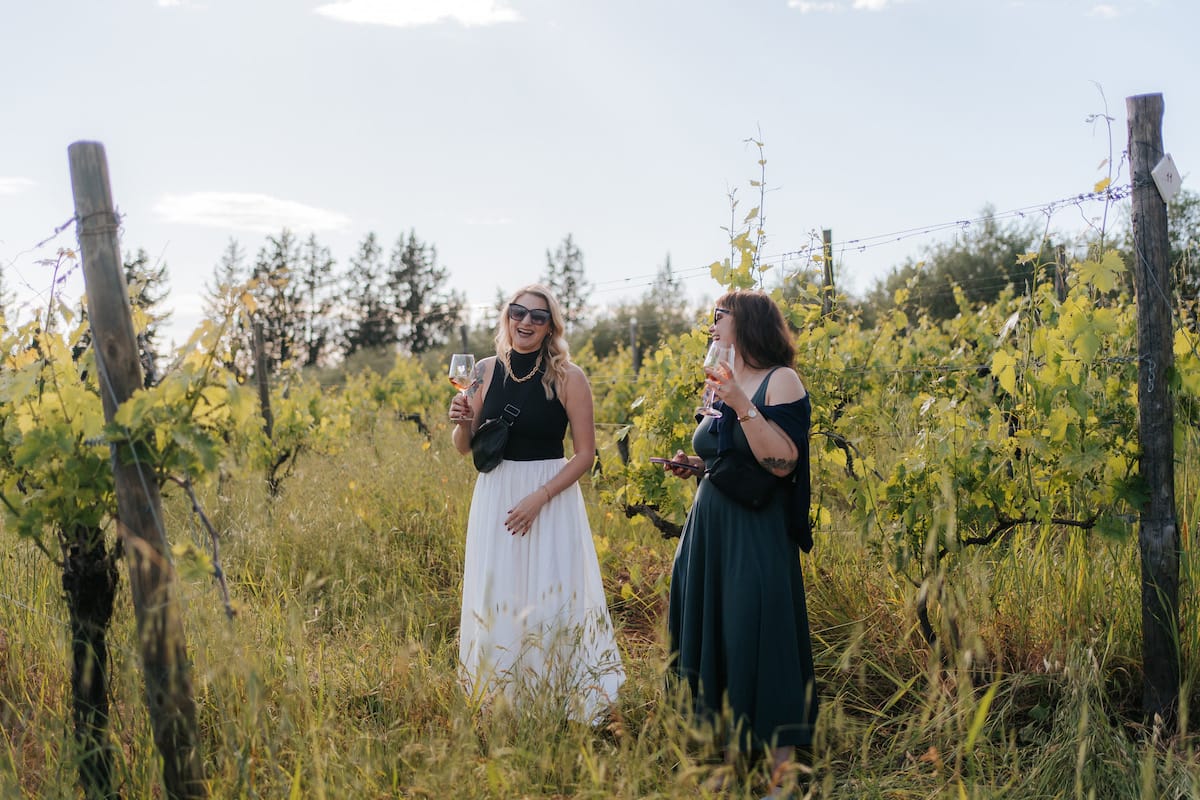
What’s more authentic and off the road than being right there at the origin of the grapes
One often-overlooked truth…the roads!
Getting to agriturismi can be tough! Since they’re in the countryside, very, very few are connected by train or bus. And while some kind agriturismi owners will pick you up from a station, if it’s even nearby, if you come without a car you’re then stranded there for the length of your stay. (On second thought, maybe that’s not a bad thing…).
However, if you do have a car you also need to be aware that agriturismi can also be difficult to find. Driving around Italy’s countryside is one of the more confusing experiences you’ll have; many roads are unmarked (or the signage is misleading). Even with a good grasp of Italian and a mobile phone, the lack of cell service can make following GPS or continually calling the owner for new directions very tricky.
Another point is that the roads can be, erm, interesting. Some are tucked away in the countryside, reached by winding lanes, dirt roads and gravel tracks that can feel a world away from the main roads. The final stretch may involve steep climbs, tight bends or an unpaved track through the hills. It can occasionally make for an adventurous journey, but that’s also part of the charm: arriving at an agriturismo often feels like you’ve truly left the everyday world behind.
So, despite these cautionary tales… we’ve never regretted making it to one of these farm-stays. Because as interesting as the journey was, the destination was always more than worth it.

July is harvest season in many of Italy’s wine regions, making it an excellent time to explore the country’s vineyards
FAQ´s – What is an agriturismo?
How much does it cost to stay at an agriturismo?
Prices vary widely depending on the location, season and type of accommodation. A simple room or apartment can be reasonably priced, while larger properties with pools, restaurants or additional services can cost considerably more. It’s worth comparing options and checking what’s included before booking.
How do you book an agriturismo?
You can book many agriturismi through major accommodation websites, specialist farm-stay sites or directly through the property’s own website. Booking directly can sometimes give you more information about the property, including directions, meals and activities, so it’s worth contacting the owners if you have questions.
What should you take when staying at an agriturismo?
Pack for the countryside rather than the city. Comfortable shoes are useful for gravel paths, walks and exploring the surrounding area, while a light jacket can come in handy in the evenings. If your agriturismo is remote, it’s also sensible to check whether there are shops nearby and bring any essentials you might need.
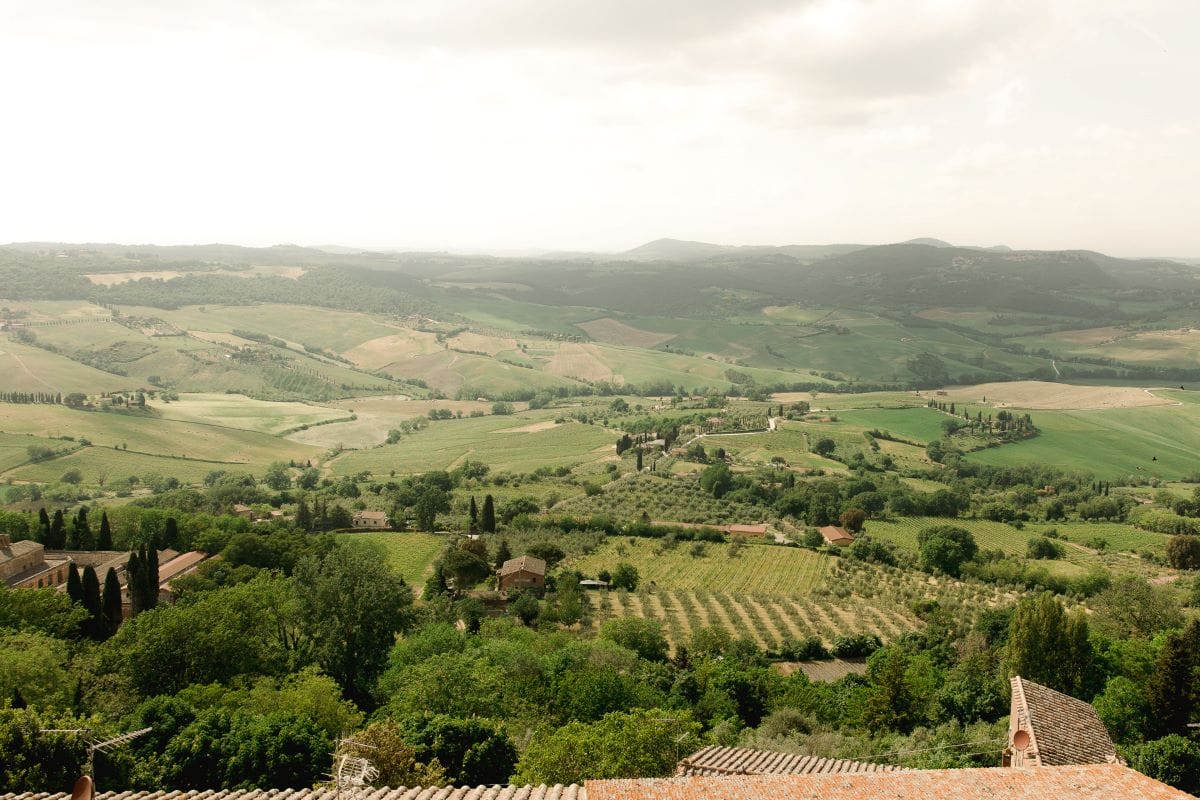
It’s a beautiful view!
Get ready to book an agriturismo stay
If you like the idea of staying in the Tuscan countryside but want to get a feel for it first, a private day tour from Florence is an easy way to dip your toe in. Explore the rolling hills and rural landscapes, enjoy a leisurely Tuscan farm-house lunch and discover some of the region’s local traditions with one of our expert guides. You’ll get a taste of countryside life before deciding whether you’re ready to make an agriturismo part of your next Italian escape.
Explore Tuscany on a private day trip from Florence for a taster of this amazing region.

Book a Tour

Pristine Sistine - The Chapel at its Best
€89

1794 reviews

Premium Colosseum Tour with Roman Forum Palatine Hill
€56
850 reviews
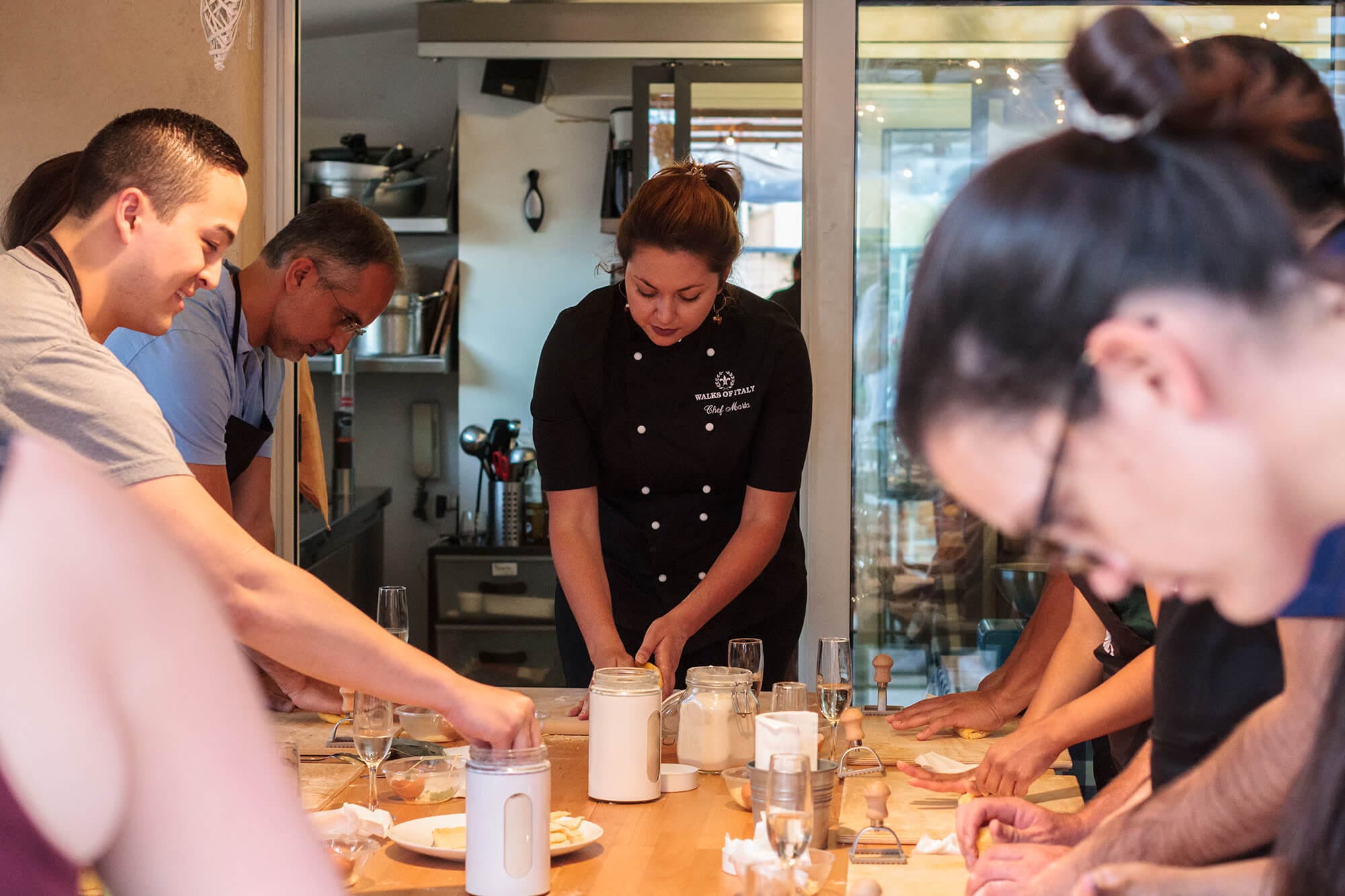
Pasta-Making Class: Cook, Dine Drink Wine with a Local Chef
€64
121 reviews

Crypts, Bones Catacombs: Underground Tour of Rome
€69
401 reviews

VIP Doge's Palace Secret Passages Tour
€79
18 reviews

Legendary Venice: St. Mark's Basilica, Terrace Doge's Palace
€69
286 reviews
Follow us
Stay up to date with travel tips, local insights and all things Italy on our social channels!


Subscribe to our Newsletter
Get curated Italy travel tips delivered to your inbox!
